Quick answer: Bamboo sheets, woven from bamboo viscose, sleep cooler and wick moisture better than most cotton because the fiber absorbs and releases water quickly, which helps hot sleepers stay dry. They also feel silky-soft, glide gently against skin, and resist odors between washes. The tradeoffs are a higher price and a fabric that needs a gentle wash, so it pays to check for OEKO-TEX Standard 100 certification and a closed-loop production process before you buy.
Bamboo sheets have gone from a niche pick to the thing half your feed swears by. The claims can get loud, so it helps to separate what the fabric actually does from the marketing. Here is the honest version: what bamboo viscose is, the real benefits behind the buzzwords, the tradeoffs worth knowing, and how to buy a set that lives up to the hype.
What bamboo sheets actually are
Almost every "bamboo sheet" on the market is made from bamboo viscose, a fiber created by breaking bamboo pulp down into a soft, spinnable material. That processing is why the fabric feels closer to silk than to a stiff cotton percale. It is worth naming plainly, because a label that just says "bamboo" or "100% bamboo" is skipping over how the fiber is actually made. The reputable version is bamboo viscose produced in a closed-loop system, where the water and solvents used to make the fiber are captured and recycled rather than dumped.
The One Sheet is made from organic bamboo viscose produced this way, using a closed-loop process that recaptures and recycles its process chemicals. That distinction matters more than the word "bamboo" on its own, and it is the first thing to look for when you compare sets.
The real benefits of bamboo sheets
They sleep cooler because the fiber moves moisture
The headline benefit is temperature. Bamboo viscose has a moisture regain of around 13%, compared with roughly 8% for cotton, which means the fiber pulls in more humidity from the air right against your body and releases it into the room. On a warm night the average sleeper can give off up to about 500 milliliters of moisture, and a fabric that keeps shuttling that away from your skin is the difference between waking up clammy and waking up dry. The weave stays breathable, so heat does not get trapped the way it can under heavier cotton.
They wick moisture faster than cotton
Cooling and wicking are related but not identical. In fabric tests, bamboo viscose has shown moisture-wicking capacity in the range of three to four times that of cotton. For hot sleepers, night-sweat sufferers, and anyone in a warm climate, that faster wick is the single most requested feature, and it is the reason bamboo sheets keep showing up on cooling-sheet lists.
They feel silky-soft from the first night
Bamboo viscose fibers are smooth and round in cross-section, so the fabric drapes and glides instead of catching. Many people compare the hand-feel to a high-end sateen or a silk blend, and unlike some cotton sets, bamboo sheets tend to feel soft right out of the package rather than needing a dozen washes to break in.
They are gentle on sensitive skin
Because the fibers are smooth and low-friction, bamboo sheets are designed to reduce the rubbing and irritation that rougher weaves can cause, which is why customers with sensitive or acne-prone skin often report an easier night. The surface also holds less moisture against the skin, and a drier sleep surface is a less friendly environment for the dust and dampness that can trigger irritation.
They stay fresh between washes
A fabric that keeps moisture moving instead of holding it tends to hold onto odor less, so bamboo sheets often smell fresh longer between washes than a damp cotton set would. That is a comfort and convenience benefit, not a medical one, and it is one of the most common things owners mention after a few months of use.
They hold up when you treat them right
Good bamboo viscose sheets are built to stay soft over time rather than going scratchy or pilling early, provided they are washed gently. Longevity is really a care story, and we cover the exact routine below, because the fastest way to shorten a bamboo sheet's life is a hot wash and a hot dryer.
They can be a genuinely lower-impact choice
Bamboo itself grows quickly without much need for pesticides, but the sustainability story lives or dies in the processing. A responsible closed-loop process recycles up to 99% of the solvents and water it uses, which keeps chemicals out of waterways. Look for verifiable proof rather than vague "eco" language: OEKO-TEX Standard 100 certification means the finished fabric has been tested for harmful substances, and FSC certified materials point to responsibly sourced inputs. The One Sheet carries both OEKO-TEX Standard 100 and FSC certification.

What is the downside to bamboo sheets?
The honest downsides of bamboo sheets are a higher price than basic cotton, a tendency to wrinkle, and a fabric that needs a gentler wash and dry than you might be used to. None of these are dealbreakers, but they are real.
The bigger catch is quality and labeling. "Bamboo" on a tag tells you almost nothing, because the benefits depend on the fiber being properly made bamboo viscose in a clean, closed-loop process. Cheaper sets can cut corners on processing, which is exactly why certifications like OEKO-TEX Standard 100 and a transparent closed-loop claim are worth more than the raw word "bamboo." If a set is unusually cheap and vague about how it is made, that is your signal to keep looking.
Are bamboo sheets better than cotton?
For hot sleepers, sensitive skin, and next-to-silk softness, bamboo viscose usually wins; for the lowest price and a crisp, structured feel, classic cotton still has a place. Here is a side-by-side on the traits people ask about most.
| Trait | Bamboo viscose | Cotton |
|---|---|---|
| Temperature | Sleeps cooler, moves heat away | Cooler in percale, warmer in sateen |
| Moisture-wicking | Around 3 to 4 times cotton | Moderate |
| Feel | Silky, fluid drape | Crisp (percale) or smooth (sateen) |
| Softness when new | Soft right away | Often softens over many washes |
| Care | Gentle, cool wash preferred | More forgiving |
| Price | Higher | Wide range, often lower |
Neither is "the healthiest sheet" on its own. The healthiest sheet is the clean, well-made one you will actually keep on the bed, in a fiber that suits how you sleep.
Why bamboo viscose works even better in a connected sheet
Here is the part most benefit guides skip. A cooling, moisture-wicking fabric only helps you if it stays where it belongs all night. The most common failure is not the fiber, it is the top sheet twisting into a rope and the fitted sheet popping off a corner, which pulls that breathable fabric out from under you right when you want it.
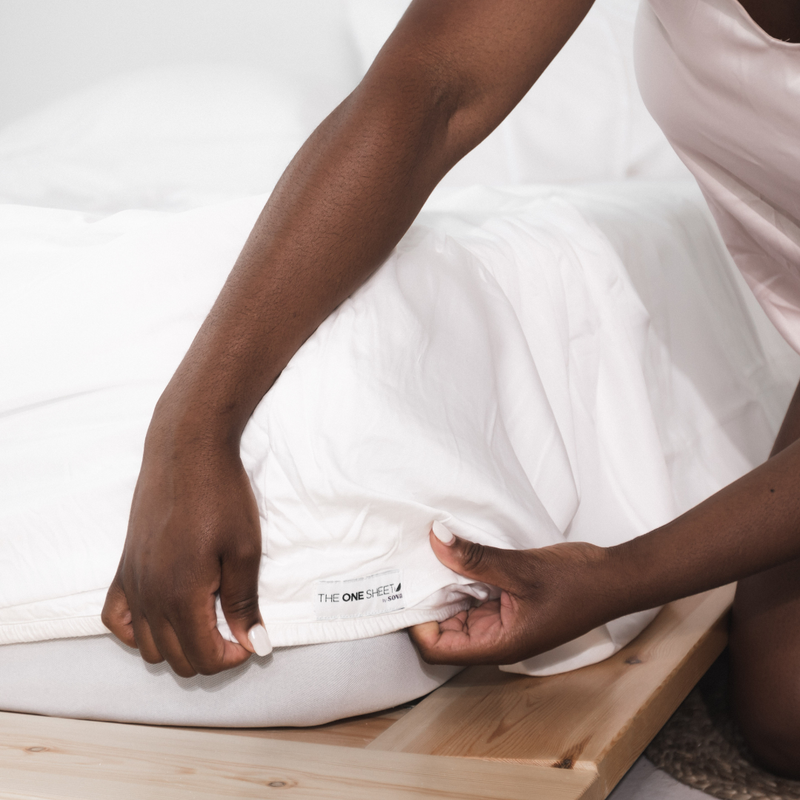
The One Sheet solves that structurally. It is a patented connected system where the top sheet is permanently sewn to the fitted sheet at the foot of the bed, so the two pieces cannot shift, bunch, or separate. You get every benefit of organic bamboo viscose, the cooling, the wicking, the soft hand-feel, without fighting your bed to keep it in place. The deep pockets fit standard, thick, and adjustable mattresses, and it is backed by a 100-night sleep trial.
How to get the most out of your bamboo sheets
Getting the full lifespan and feel out of bamboo viscose comes down to a gentle laundry routine.
- Wash in cold or lukewarm water on a gentle cycle. Hot water breaks down the fiber faster.
- Use a mild liquid detergent, and skip bleach and fabric softener, which coat the fiber and dull the silky feel.
- Wash bamboo sheets separately from towels, zippers, and hooks that can snag and pill the fabric.
- Use a mesh wash bag to keep the set from tangling and twisting in the drum. Every One Sheet ships with a free mesh wash bag, and because the top and fitted sheets are connected, the whole set washes as one piece without wrapping around everything else.
- Line dry when you can, or tumble dry on low and pull the sheets out promptly to cut down on wrinkles.
That is the entire routine. Treat bamboo viscose gently and it rewards you with years of soft, cool nights.
Key takeaways
- Bamboo sheets are made from bamboo viscose, and the good ones are produced in a closed-loop process that recycles its water and solvents.
- The core benefits are cooler sleep, faster moisture-wicking (around 3 to 4 times cotton), a silky feel, and a surface that is gentle on skin.
- Bamboo viscose regains about 13% moisture versus roughly 8% for cotton, which is the mechanism behind the cooling.
- The real downsides are price, wrinkling, and the need for a gentle wash, plus vague labeling on cheap sets.
- Look for OEKO-TEX Standard 100 certification and FSC certified materials as proof, not just the word "bamboo."
- The benefits only help if the sheet stays put, which is where The One Sheet's connected design comes in.
Frequently asked questions
What is so special about bamboo sheets?
Bamboo sheets are special because bamboo viscose absorbs and releases moisture faster than cotton, which keeps the sleep surface cool and dry, while the smooth fibers give the fabric a silky feel that is gentle on skin.
What is the downside to bamboo sheets?
The main downsides of bamboo sheets are a higher price than basic cotton, a tendency to wrinkle, and a need for gentle, cool washing. Quality also varies widely, so certifications like OEKO-TEX Standard 100 matter more than the word "bamboo" on the label.
Are bamboo sheets better for you than cotton?
Bamboo sheets tend to be better for hot sleepers and sensitive skin because bamboo viscose sleeps cooler and glides more gently than most cotton, while cotton can be the better value and a crisper feel. The best choice depends on how you sleep.
What are the healthiest sheets to sleep on?
The healthiest sheets are ones made from a clean, certified fabric you wash regularly and actually keep on the bed. Bamboo viscose sheets with OEKO-TEX Standard 100 certification are a strong option because the fabric is tested for harmful substances and helps keep the surface dry.
Do bamboo sheets really stay cooler all night?
Bamboo sheets stay cooler because the fiber keeps moving moisture off your skin and into the room rather than trapping it, so the wicking that keeps you dry is also what keeps you cool through the night.
Cool, soft, low-drama sleep starts with a fabric that works and a sheet that stays put. If night sweats or a runaway top sheet are what sent you looking, The One Sheet pairs organic bamboo viscose with a connected design that cannot shift off the bed, backed by a 100-night sleep trial.