If you wake up damp, kick the covers off, then flip the pillow looking for a cool spot, your sheets are part of the story. The right set will not stop a medical night sweat, but it will pull moisture off your skin and let heat escape instead of holding both against you until you wake up. This guide explains what actually makes a sheet good for sweaty sleepers, ranks the common fabrics by how they handle moisture, and shows you the details worth checking before you buy.
Quick answer: The best sheets for sweaty sleepers are breathable, moisture-wicking natural or plant-based fabrics in a light, open weave: percale cotton, linen, organic bamboo viscose, and eucalyptus lyocell. Skip microfiber and polyester, which trap heat and hold sweat against your skin. Choose percale over sateen and a moderate thread count around 200 to 400, since very high counts reduce airflow and sleep hotter.
What makes a sheet good for sweaty sleepers?
A good sheet for sweaty sleepers does two jobs at once: it moves moisture away from your skin, and it lets body heat pass through instead of trapping it. That comes down to three things. The fiber decides how much moisture the fabric can absorb and release. The weave decides how much air can move through it. And the weight, often listed in grams per square meter (GSM), decides how much fabric sits against you holding warmth. Natural and plant-based fibers in a light, open weave beat dense synthetics for almost every sweaty sleeper, and the sections below explain why.
Why do my sheets make you sweat at night?
Your body is trying to cool down while you sleep, and the wrong sheet fights that process. Core body temperature naturally falls by about 1 to 2 degrees Fahrenheit in the evening, and that drop is one of the signals that tells your brain to fall and stay asleep. To lose that heat, your skin needs to shed warmth and evaporate a small amount of moisture into the air. A breathable sheet lets that happen. A heat-trapping sheet does not, so your body sweats harder to try to cool itself, and the moisture has nowhere to go.
How much moisture are we talking about? Under cool, comfortable conditions a sleeping adult loses only around 200 milliliters of water across a full eight hours, and much of that is breathed out rather than soaked into the bed. In a hot room, though, sweat output climbs fast, and researchers measuring people resting in high heat recorded rates that would add up to close to two liters over a night. So the same body can produce ten times the sweat depending on its environment, and your sheets and room temperature are a big part of that environment.
For some sleepers the trigger is medical rather than environmental. True night sweats, the kind that soak through nightclothes, affect an estimated 10 to 41 percent of people and are most common between the ages of 41 and 55. Menopause is a leading cause: up to roughly 80 percent of women report hot flashes and night sweats during the transition, and those vasomotor symptoms last a median of more than seven years. Sheets cannot cure any of that, but breathable bedding gives your skin the best possible chance to dry off and cool down between episodes, which is exactly why fabric choice matters so much for this group.
The best sheet materials for sweaty sleepers
Fiber sets the ceiling on how cool a sheet can sleep. Here is how the common options handle heat and moisture, from most forgiving for a sweaty sleeper to least.
Percale cotton. Percale is a plain, one-over-one-under weave, usually in cotton, that feels crisp and matte like a fresh dress shirt. The open weave moves air well, and cotton absorbs a lot of moisture for a natural fiber, so percale is a reliable, widely available cool-sleeping choice. The tradeoff is that cotton holds onto the moisture it absorbs, so in a very humid room a heavy sweater can end up on a damp sheet by morning.
Linen. Linen is made from flax, and its thick, irregular fibers create an airy, textured fabric that breathes beautifully and dries quickly. It is one of the best hot-weather fabrics there is. The catch is feel and price: linen is deliberately rough and rumpled, which not everyone likes, and quality linen tends to cost more.
Bamboo viscose. Bamboo viscose is a regenerated fiber made from bamboo pulp. It drapes silky-smooth and is highly breathable, and because the fiber is engineered to be absorbent, it pulls moisture off the skin and feels cool to the touch. For sweaty sleepers who want the airflow of a natural fiber with a softer, silkier hand than crisp percale, organic bamboo viscose is one of the strongest options available.
Eucalyptus lyocell (TENCEL). Lyocell made from eucalyptus is another plant-based fiber known for excellent moisture-wicking and a light, smooth feel. Very lightweight eucalyptus sheets are especially good at pulling sweat away from the body, which makes them a favorite for heavy sweaters. Like bamboo viscose, it sits in the silky-and-breathable camp rather than the crisp camp.
Microfiber and polyester. These synthetics are cheap and soft out of the package, but they are the worst pick for a sweaty sleeper. Polyester absorbs less than one percent of its weight in moisture, while cotton absorbs around 7 to 8 percent. Because the synthetic fiber cannot absorb sweat and does not conduct heat well, moisture sits on your skin and warmth builds up underneath you. If you sweat at night, synthetics tend to make it worse.

Fabric comparison at a glance
| Fabric | How it handles heat and moisture | Best for |
|---|---|---|
| Percale cotton | Crisp, breathable, absorbs moisture but holds it | Sleepers who like a cool, crisp feel |
| Linen | Very airy, dries fast, textured | The hottest rooms and hottest sleepers |
| Bamboo viscose | Silky, breathable, wicks moisture off skin | Cool sleeping with a soft, smooth feel |
| Eucalyptus lyocell | Lightweight, strong moisture-wicking | Heavy sweaters who want featherweight sheets |
| Microfiber / polyester | Traps heat, sweat sits on skin | Not recommended for sweaty sleepers |
Is bamboo or cotton better for night sweats?
For most people with night sweats, bamboo viscose has an edge over standard cotton, though both beat synthetics. Cotton is breathable and absorbent, but it holds the moisture it soaks up, so a heavy sweater can finish the night on a damp sheet. Bamboo viscose is engineered to be both breathable and moisture-wicking with a lighter, silkier feel, so it tends to move sweat away and dry faster. Crisp percale cotton is still an excellent, affordable cool-sleeping fabric, so the honest answer is that both are good and bamboo viscose usually feels drier for the sweatiest sleepers.
Weave and thread count: what to actually check
Weave matters as much as fiber, and thread count matters less than the marketing suggests. For airflow, choose percale over sateen. Sateen uses a denser, mostly-over weave that feels smooth and looks slightly shiny, but that density traps more heat, so percale is the cooler-sleeping weave. On thread count, higher is not better for temperature: an extremely high thread count packs more yarn into the same space and reduces airflow, so a moderate count in the rough range of 200 to 400 usually sleeps cooler than a 1,000-count sheet. And for plant-based fibers like linen, bamboo viscose, and eucalyptus, weight (GSM) is a more useful cooling signal than thread count at all, with lighter fabrics sleeping cooler.
The fit problem sweaty sleepers overlook
Fabric is most of the battle, but fit is the part people forget. A breathable sheet only helps while it is actually against you. If your top sheet slides, bunches, and works its way loose overnight, you spend part of the night lying on the bare mattress, which is the hottest, least breathable surface on the bed. A cooling fabric cannot cool you if it has migrated into a knot by your knees.
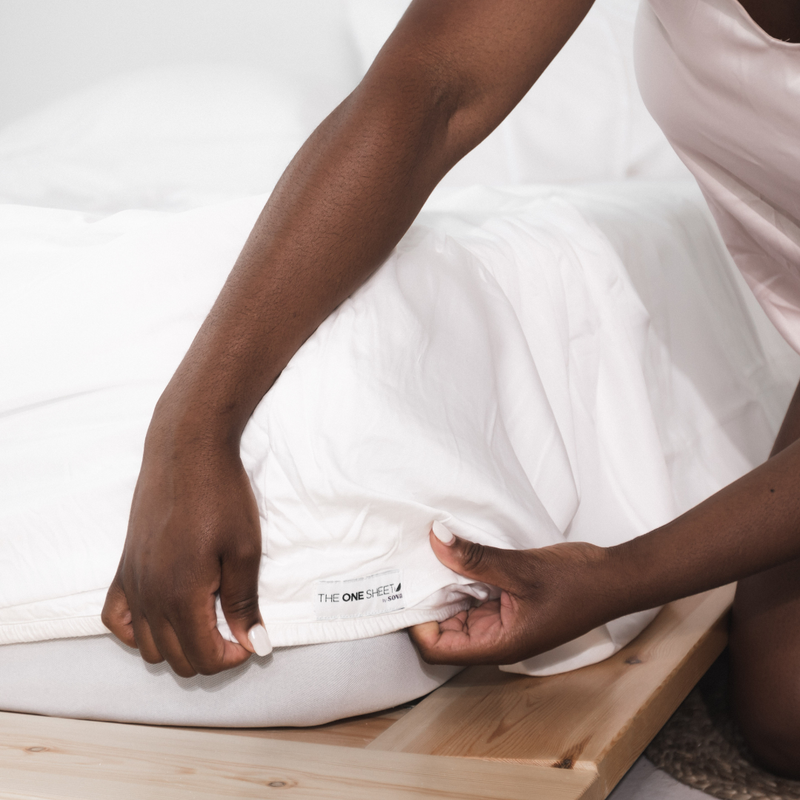
This is where The One Sheet is built differently. It is a connected sheet system: the top sheet is permanently sewn to the fitted sheet at the foot of the bed, so the breathable layer stays where it belongs all night instead of untucking and drifting. The One Sheet is made from organic bamboo viscose, so you get the silky, breathable, moisture-wicking fiber that sweaty sleepers want, in a design that keeps that fiber against you rather than kicked to the side. The fabric is OEKO-TEX Standard 100 certified and made with FSC certified materials, and the deep pockets fit thick and adjustable mattresses without popping off at the corners.
Care matters for a sweaty sleeper too, because sheets you sweat in need frequent washing, and frequent washing is what tangles and wears out a normal set. Every order of The One Sheet ships with a free mesh wash bag, and because the top and fitted sheets are connected, the whole set washes as a single piece instead of twisting into a rope around your other laundry. That keeps a cooling sheet cooler and smoother for longer. If a set does not work for you, the 100-night sleep trial gives you a full season of hot nights to decide.
How to keep your bed cooler at night
Once you have the right sheets, a few habits stack the deck further in your favor.
- Set the room cooler. A bedroom in the mid-60s Fahrenheit supports the natural evening drop in body temperature better than a warm room.
- Strip the bed down for summer. Skip the heavy duvet and sleep under just the breathable sheet, adding a light blanket only if you need it.
- Wash sweat-prone sheets often. Body oils and residue build up fast on bedding you sweat into, so a weekly wash keeps the fabric breathing freely.
- Let sheets dry fully and skip heavy fabric softener. Softener can leave a coating that reduces a sheet's ability to wick, which is the opposite of what a sweaty sleeper wants.
- Choose a light color and a light weight. A thin, pale sheet in a breathable fiber holds less warmth against you than a heavy, dark one.
Key takeaways
- Sweaty sleepers should prioritize breathability and moisture-wicking above softness or thread count.
- Plant-based fibers (percale cotton, linen, bamboo viscose, eucalyptus lyocell) sleep far cooler than microfiber and polyester, which trap heat and sweat.
- Percale beats sateen for airflow, and a moderate thread count around 200 to 400 usually sleeps cooler than a very high one.
- Bamboo viscose tends to feel drier than plain cotton for the heaviest sweaters while staying soft and silky.
- Fit matters: a sheet that shifts leaves you on the hot bare mattress, so a set that stays put keeps the cooling fabric working all night.
- Sheets cannot cure medical night sweats, but breathable bedding gives your skin the best chance to dry and cool between episodes.
Frequently asked questions
Is bamboo or cotton better for night sweats? Both are better than synthetics, and bamboo viscose usually has the edge for heavy sweaters. Cotton is breathable but holds the moisture it absorbs, while bamboo viscose is engineered to wick moisture away and dry faster with a lighter, silkier feel. Crisp percale cotton is still an excellent, affordable cool-sleeping choice.
Are my sheets causing night sweats? Your sheets can make sweating worse even if they are not the root cause. Synthetic fabrics like polyester and microfiber trap heat and hold moisture against your skin, so your body sweats harder to cool down. Switching to a breathable, moisture-wicking fabric will not fix a medical cause, but it removes bedding as a contributing factor.
What sheets prevent sweating? No sheet truly prevents sweating, but breathable, moisture-wicking fabrics minimize it by letting heat escape and pulling moisture off your skin. Linen, percale cotton, bamboo viscose, and eucalyptus lyocell in a light, open weave are the best choices. Dense synthetics are the worst.
Is 100 percent cotton good for night sweats? Yes, 100 percent cotton in a percale weave is a good, breathable choice for night sweats and far better than synthetics. Its main limitation is that cotton holds the moisture it absorbs, so in a very humid room the sheet can feel damp by morning, where bamboo viscose or eucalyptus may dry faster.
What thread count is best for hot sleepers? A moderate thread count, roughly 200 to 400, usually sleeps cooler than a very high one. Extremely high thread counts pack in more yarn and reduce airflow, trapping heat. For plant-based fibers, fabric weight (GSM) and weave are more useful cooling signals than thread count.