Quick answer: A standard King mattress measures 76 by 80 inches (6,080 square inches of surface), while a California King measures 72 by 84 inches (6,048 square inches), four inches narrower but four inches longer. The King is the better pick for couples who want maximum width or share the bed with kids and pets, while the California King suits sleepers over about 6'2" and long, narrow bedrooms. King and California King sheets are not interchangeable, since the two mattresses are shaped differently, so it's worth checking the label before you buy bedding for either one.
Both sizes get called "the big bed" at the mattress store, and the four-inch swap between width and length sounds minor until you're the one measuring a doorway or shopping for sheets that won't leave a gap at the corner. Here's what actually separates a California King from a standard King, which one fits your room and your height, and why the sheets for each size aren't as interchangeable as they look.
What Is the Difference Between a California King and a King?
A standard King (also called an Eastern King) measures 76 inches wide by 80 inches long. A California King measures 72 inches wide by 84 inches long. The California King is four inches narrower and four inches longer than the standard King.
That trade means the King actually has slightly more total sleeping surface: 6,080 square inches versus the California King's 6,048 square inches, even though the California King is the longer mattress. The difference between them comes down to shape more than size. A standard King is close to square, built for width. A California King is a longer rectangle, built for length.
| Spec | King (Eastern King) | California King |
|---|---|---|
| Width | 76 in (193 cm) | 72 in (183 cm) |
| Length | 80 in (203 cm) | 84 in (213 cm) |
| Total surface area | 6,080 sq in | 6,048 sq in |
| Shape | Closer to square | Longer, narrower rectangle |
| Best suited to | Wide bedrooms, couples who want max width | Long, narrow bedrooms, sleepers over 6'2" |
| Sheet and frame availability | Widest selection, most affordable | Narrower selection, typically 15-25% more |
Which Mattress Size Fits Your Bedroom?
Room shape decides this one more often than personal preference does. A standard King generally needs a bedroom of at least 12 by 12 feet to leave comfortable walking space on both sides and at the foot of the bed. A California King is better suited to a room that's at least 12 by 14 feet, or a room that's long and narrow rather than square, since the extra length needs to go somewhere and the reduced width can actually help in a tighter room.
If your bedroom is roughly square, a standard King will usually feel more balanced in the space. If your bedroom is long and narrow, a California King can center more naturally along that length, and the narrower width leaves a bit more floor space on either side for nightstands or a dresser.
Who Should Choose a California King?
A California King is the right call for sleepers who are noticeably tall, generally over about 6'2" to 6'3", since the extra four inches of length keeps feet from hanging off the end of the mattress. It's also the better fit for a long, narrow master bedroom where a wide, square standard King would crowd the walking space on either side of the bed.
The tradeoff is availability. Because the California King is less common than the standard King, bedding, frames, and headboards built specifically for it tend to cost more, and you'll have fewer style options to choose from when shopping.
Who Should Choose a Standard King?
A standard King is the better default for most couples, mainly because of the width. At 76 inches across, it gives two people about 38 inches of personal space each, roughly the width of a twin mattress per side, which matters if you're sharing the bed with a restless partner, a pet, or small kids who climb in overnight. It also fits comfortably in a square or moderately sized bedroom without the length requirements a California King needs.
Standard King is also the far more common size, so you'll find a bigger selection of frames, headboards, and sheets at a wider range of price points. If you're not unusually tall and your bedroom isn't long and narrow, a standard King is typically the simpler, less expensive choice.
Do King and California King Sheets Fit the Same?
No. Because the two mattresses are different shapes, not just different sizes, King sheets and California King sheets are cut differently and generally aren't interchangeable. A California King fitted sheet is sewn for a mattress that's narrower and longer, so stretching a standard King fitted sheet over a California King mattress leaves it too tight on the length and loose on the width, and vice versa. Flat top sheets and comforters are a little more forgiving since they aren't fitted to the mattress shape, but a proper King or California King flat sheet is still cut to different final dimensions.
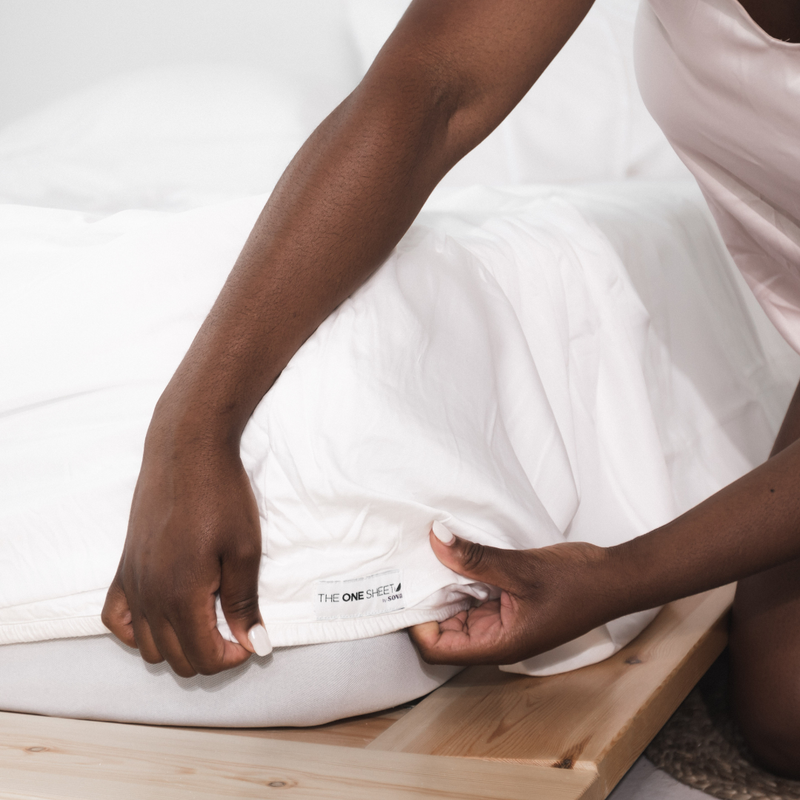
Buying the correctly sized sheet is only half the equation, though. Even a sheet cut for the exact right mattress will pop off the corners if it isn't seated properly. The most common mistake is pulling the fitted sheet's pocket straight down over the corner tip, which tents the fabric into an upside-down U and leaves the elastic gripping one small point instead of the whole corner. The fix is to seat each corner flat: hook the pocket over the top of the corner, then pull it down and under so the deep part of the pocket wraps the underside of the mattress, not just the tip. Pocket depth matters too, especially on a thick or pillow-top mattress; if a properly seated corner still won't stay down, measure your mattress height (including any topper) and compare it against the sheet's stated pocket depth before assuming the sheet itself is the problem.

Clips, straps, and suspenders can help manage a corner that keeps slipping, but they're ongoing maintenance for a design that has two separate pieces of fabric working against each other. The One Sheet solves this differently: the organic bamboo viscose top sheet is permanently sewn to the fitted sheet at the foot of the bed, so once the fitted sheet's corners are seated, the whole set moves as one connected piece instead of the top sheet migrating on its own overnight. It comes with deep pockets built for standard, thick, and adjustable mattresses, and is cut specifically for both King and California King, so you're not stretching one size's sheet over the other's mattress. Every set ships with a 100-night sleep trial, so you can confirm the fit on your actual bed before committing.
How Much Do California King Sheets Cost Compared to King?
Because standard King is the more common size, King sheets, frames, and headboards are generally cheaper and easier to find than California King equivalents. Expect to pay roughly 15 to 25 percent more for a California King sheet set or comforter than the equivalent King version from the same brand, mostly because manufacturers produce fewer California King units and carry a narrower selection of styles. Mattress pricing between the two sizes tends to land close together, since the total surface area is nearly identical, but bedding and accessories are where the cost gap shows up.
What About Other Oversized Beds? (Texas, Alaskan, Wyoming, and Eastern King)
King-size beds get more crowded than most people expect once you go past the standard and California options. A few names come up often enough to be worth defining:
- Eastern King is simply another name for the standard King (76 by 80 inches). If a retailer lists "Eastern King," it's the same size as a regular King, not a separate one.
- Texas King measures 80 by 98 inches, the same width as a standard King but 18 inches longer, built for sleepers over about 6'5" or anyone who wants significantly more legroom.
- Wyoming King measures 84 by 84 inches, a perfect square that splits the difference between width and length.
- Alaskan King and Florida King are both 108 by 108 inches and are generally treated as the same size under two different names, large enough to comfortably fit a family or multiple pets.
None of these oversized sizes are standardized the way King and California King are, so dimensions can vary slightly by manufacturer. If you're shopping for one, confirm the exact measurements with the specific brand rather than assuming every "Texas King" or "Alaskan King" is identical.
How to Decide: A 4-Step Method
- Measure your bedroom. Note the length and width of the room, and mark out roughly 12 by 12 feet (King) or 12 by 14 feet (California King) with painter's tape if you want to see the footprint before buying.
- Check your height and sleep position. If you or a partner is taller than about 6'2", the extra four inches of a California King is worth the tradeoff in width.
- Think about who and what shares the bed. Kids, pets, or a restless sleep partner all argue for the standard King's extra width.
- Compare sheet and bedding costs in your target style. If you have a specific look in mind, check that it's actually available (and reasonably priced) in California King before you commit to the frame.
Key Takeaways
- A standard King measures 76 by 80 inches (6,080 sq in); a California King measures 72 by 84 inches (6,048 sq in), and the King actually has slightly more surface area despite being shorter.
- California King suits taller sleepers (roughly 6'2"+) and long, narrow bedrooms; standard King suits wider rooms and couples who want maximum shared width.
- King and California King sheets are not interchangeable because the mattresses are different shapes, not just different sizes.
- California King sheets, frames, and headboards typically cost 15 to 25 percent more than King due to lower availability.
- Eastern King is just another name for standard King; Texas King, Wyoming King, and Alaskan/Florida King are separate, larger, non-standardized sizes.
- Sheets popping off a corner is almost always a seating-technique or pocket-depth issue, not a sign the sheet is the wrong size.
Frequently Asked Questions
What is better, a King or a California King?
Neither is objectively better; the right choice depends on your bedroom shape and height. A standard King suits wider rooms and couples who want maximum shared space, while a California King suits taller sleepers and long, narrow bedrooms.
Is a California King bigger than a King?
Not in total surface area. A California King is four inches longer than a standard King but four inches narrower, giving it slightly less total surface area (6,048 square inches versus 6,080 square inches).
What size is an Eastern King bed?
An Eastern King is the same as a standard King: 76 inches wide by 80 inches long. "Eastern King" and "King" refer to the same mattress size.
How big is a Texas King?
A Texas King measures 80 inches wide by 98 inches long, the same width as a standard King but 18 inches longer, designed for sleepers over about 6'5".
What is an Alaskan King?
An Alaskan King measures 108 by 108 inches, a large square bed generally treated as the same size as a Florida King and big enough to comfortably fit a family or multiple pets.
How big is a Florida King?
A Florida King is typically 108 by 108 inches, the same dimensions commonly used for an Alaskan King; the two names are generally used interchangeably.
Is an Alaskan King or Texas King bigger?
The Alaskan King is bigger. At 108 by 108 inches, it has significantly more total surface area than the Texas King's 80 by 98 inches.
Can I use King sheets on a California King mattress?
No. King fitted sheets are cut for a wider, shorter mattress, so they won't seat properly on a California King's narrower, longer shape. Buy sheets sized specifically for the mattress you own.
Where to Buy King and California King Sheets
Both sizes are widely available from big-box retailers, department stores, and direct-to-consumer bedding brands, so finding a set in your size isn't the hard part. The harder part is finding one that actually stays put once it's on the bed, night after night, regardless of whether your mattress is a wide standard King or a long California King. The One Sheet is cut specifically for both sizes, with deep pockets built for standard, thick, and adjustable mattresses, and its connected design means the top sheet can't migrate away from the fitted sheet the way it can with a traditional two-piece set. It's backed by a 100-night sleep trial, so you can try it on your actual bed before deciding it's the one.