Quick answer: Deep pocket sheets have fitted-sheet pockets that run 14 to 17 inches deep, built for mattresses between roughly 13 and 17 inches thick. If your mattress (plus any topper) measures 18 inches or taller, you need extra-deep pocket sheets, which stretch to 18-22 inches. Measure your mattress from its lowest seam to its highest point before you buy, then add 2 to 3 inches of allowance so the sheet has room to seat properly instead of just barely reaching.

Mattresses have gotten thicker. Sheets, for the most part, have not kept up. A decade ago, a "standard" fitted sheet with an 8 to 10-inch pocket fit most beds in most homes. Today, hybrid mattresses, pillow-tops, and memory foam toppers routinely push total mattress height past 13 or 14 inches, and a standard sheet on one of those beds turns into a nightly tug-of-war. It slips off the corner an hour after you make the bed. It stretches so tight it looks more like shrink-wrap than bedding. Deep pocket sheets exist to solve that specific, measurable problem, and figuring out which depth you need is mostly a matter of getting an accurate mattress measurement, not guesswork.
What Counts as a "Deep Pocket" Sheet?
A deep pocket sheet is a fitted sheet with extra fabric built into each corner so the pocket can stretch over a taller mattress. Where a standard fitted sheet pocket typically runs 7 to 12 inches, a deep pocket sheet extends to roughly 14 to 17 inches, and an extra-deep (sometimes called "extra deep" or "super deep") pocket sheet goes further still, up to about 22 inches for the tallest pillow-top and hybrid mattresses. The category exists because mattress construction changed faster than the bedding industry's default sizing did: foam comfort layers, quilted Euro-tops, and cooling layers can each add 2 to 4 inches on top of an already-tall innerspring or hybrid core.
The practical difference shows up the moment you put the sheet on the bed. A pocket that's too shallow has to stretch across the full height of the mattress just to reach the bottom seam, which leaves almost no slack for the elastic to grip. That's when a fitted sheet pops off a corner in the middle of the night even though nothing about your sleeping habits changed.
How Thick Is Your Mattress, Actually?
Most people have never actually measured their mattress; they estimate. Before you buy sheets by pocket depth, take two minutes to measure for real.
| Step | What to Do |
|---|---|
| 1. Clear the bed | Strip off any current sheets so you're measuring the bare mattress. Leave a mattress topper in place if you use one year-round, since the sheet needs to clear that height too. |
| 2. Use a flexible tape measure | A cloth or flexible tape follows the mattress edge more accurately than a rigid ruler, especially on a pillow-top or Euro-top with a rounded profile. |
| 3. Measure straight up the corner | Place the tape at the very bottom seam of the mattress and measure straight up to the highest point, not on an angle. Do this at a corner, where the true height is easiest to see. |
| 4. Add 2-3 inches of allowance | A pocket that matches your mattress height exactly will stretch to its limit and lose grip fast. Buy a pocket depth 2-3 inches deeper than your measurement so there's slack for the elastic to actually hold. |
| 5. Match your number to a depth category | Use the chart below to translate your measurement (plus allowance) into standard, deep, or extra-deep pocket sizing. |
Deep Pocket vs. Extra-Deep Pocket: What's the Real Difference?
"Deep pocket" and "extra-deep pocket" get used loosely by retailers, and the exact inch ranges vary slightly brand to brand. Here's the general breakdown that holds across most sheet manufacturers:
| Category | Pocket Depth | Best For |
|---|---|---|
| Standard | 7-12 inches | Basic foam or innerspring mattresses under about 12 inches thick, no topper |
| Deep Pocket | 14-17 inches | Most hybrid mattresses, mattresses 13-17 inches thick |
| Extra-Deep Pocket | 18-22 inches | Pillow-tops, Euro-tops, thick memory foam, or any mattress plus a topper |
If your measured mattress height (with allowance) lands right on a border between two categories, size up rather than down. A pocket with a little extra room stretches less and lasts longer; a pocket that's exactly at your mattress's height starts thinning out at the elastic within a few wash cycles.
Depth by Mattress Type
Mattress construction is the fastest way to predict which pocket depth you'll need, even before you measure.
| Mattress Type | Typical Total Height | Pocket Depth to Look For |
|---|---|---|
| All-foam mattress | 9-12 inches | Standard (7-12") |
| Hybrid mattress | 11-13 inches | Deep pocket (14-16") |
| Pillow-top or Euro-top | 13-16+ inches | Deep to extra-deep (16-20") |
| Mattress plus a topper | add 2-4 inches to base height | Extra-deep (18-22") |
| Adjustable base mattress | 10-14 inches | Deep pocket (14-17"), and check that the sheet has enough give to flex with the base |
Why the Right Depth Doesn't Always Mean the Sheet Stays Put
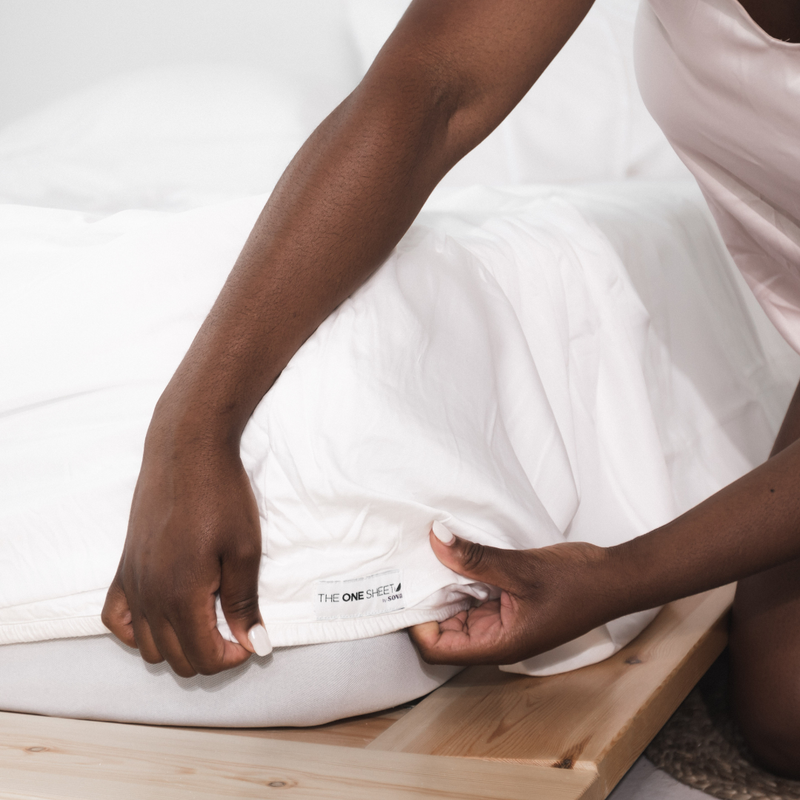
Buying the correct pocket depth solves one half of the problem. The other half is technique, and it's the half most people never think about. A fitted sheet corner that's pulled straight down over the tip of the mattress, rather than seated flat underneath it, tents into an upside-down U shape. In that position, the elastic only has a single point of contact to grip, no matter how deep the pocket is. The fix is to hook the pocket fully over the corner and pull it under the mattress so the fabric wraps the underside flat, the way the pocket was actually designed to sit.
Pocket depth still matters, and it matters most as the second variable: a correctly seated corner will still fail if the pocket physically can't reach under a 15-inch-plus mattress. That's the scenario deep and extra-deep pockets are built for. Clips, sheet suspenders, and corner grippers can help hold a marginal fit in place, but they're managing a symptom, not solving the underlying mismatch between pocket depth and mattress height.
This is also where a connected sheet system changes the math. The One Sheet's top sheet is permanently sewn to the fitted sheet at the foot of the bed, so once the fitted corners are seated correctly on a mattress within its pocket range, there's no separate top layer left to shift, untuck, or bunch independently overnight. The deep pockets are cut to fit standard, thick, and adjustable mattresses up to 17 inches, made from organic bamboo viscose, and the design removes the layer of the problem that clips and straps were never built to fix.
When You Actually Need Extra-Deep Pockets
Most bedrooms don't need extra-deep pockets, and buying one size deeper than necessary just means more excess fabric bunching at the corners. You're a good candidate for extra-deep (18-22 inch) pockets if any of these apply: your mattress has a pillow-top or Euro-top layer sewn into the construction, you regularly sleep on a mattress topper 2 inches or thicker, your hybrid or memory foam mattress measures 15 inches or taller on its own, or you've had a deep pocket sheet (14-17 inches) pop off the same corner repeatedly even when it's seated correctly. Outside of those situations, a standard deep pocket sheet in the 14 to 17-inch range covers the large majority of mattresses sold today.
Caring for Deep Pocket Sheets
Deep pocket sheets see more stress at the corners than standard sheets, since the elastic is stretched over a taller profile every time the bed is made. Washing them correctly extends the life of that elastic. Wash in cold or warm water on a gentle cycle, skip the fabric softener (it coats fibers and reduces breathability over time), and tumble dry on low or line dry when possible.
If your sheets are organic bamboo viscose, they're prone to tangling with other laundry in a large load, which twists the fabric and stresses the seams. The One Sheet ships with a free mesh wash bag with every order specifically for this reason. Because the fitted and top sheet are connected, the whole set goes into the bag and washes as one piece instead of tangling into a knot with pillowcases or a duvet cover.
Key Takeaways
- Deep pocket sheets have pockets 14 to 17 inches deep, built for mattresses roughly 13 to 17 inches thick.
- Extra-deep pocket sheets extend to 18-22 inches for pillow-tops, Euro-tops, and mattresses with a topper.
- Measure your mattress from its bottom seam straight up to its highest point, including any topper, then add 2-3 inches of buying allowance.
- A too-shallow pocket has almost no slack to grip the mattress, which is why it pops off even on a bed that hasn't changed.
- Correct depth solves half the problem; seating the corner flat under the mattress (not tented over the tip) solves the other half.
- The One Sheet's deep pockets fit mattresses up to 17 inches, and its connected design means there's no separate top sheet layer left to shift once the fitted corners are seated.
Deep Pocket Sheets FAQ
What are considered deep pocket sheets?
Deep pocket sheets are fitted sheets with pockets measuring roughly 14 to 17 inches deep, designed to fully cover mattresses between about 13 and 17 inches thick, including most hybrid and thicker foam mattresses.
Who makes the best deep pocket sheets?
The best deep pocket sheets for your bed are the ones sized correctly for your actual mattress height, made from a breathable material like organic bamboo viscose, and finished with elastic that holds its stretch through repeated washing. The One Sheet's deep pockets are cut for mattresses up to 17 inches and pair that depth with a connected top-and-fitted design so the sheet doesn't rely on pocket depth alone to stay in place.
What goes first in a bed?
The fitted sheet goes on first, wrapped around the mattress with all four corners seated flat under the edges. The top sheet (or, on a connected system like The One Sheet, the attached top layer) goes over that, followed by any blanket, comforter, or duvet.
Who sells the deepest pocket sheets?
Several bedding brands offer extra-deep pocket sheets reaching 20 to 22 inches for pillow-top and topper-heavy setups. Depth alone isn't the only factor worth comparing: how the corners are engineered to stay seated, and whether the top layer can shift independently of the fitted sheet, matter just as much as the maximum pocket number on the label.
Why does Gen Z not use top sheets?
Surveys on sleep habits have found a meaningful share of younger sleepers skip the top sheet entirely, citing the extra step of laundering and making the bed with one more layer. A connected sheet system addresses that specific complaint differently: the top sheet is already attached to the fitted sheet, so there's one piece to wash and one piece to put on, without giving up the top sheet altogether.
What kind of sheets do 5-star hotels use?
High-end hotels typically use high thread-count cotton sateen or percale sheets in white, chosen for a crisp, consistent look across every room. Hotel sheets are usually sized for standard mattress depths, which is part of why a hotel-style bed can look and feel different once it's made up on a taller mattress at home without a deep pocket fit.
Ready to stop guessing at pocket depth? The One Sheet ships with deep pockets built for standard, thick, and adjustable mattresses up to 17 inches, backed by a 100-night sleep trial.