Quick answer: Percale and sateen are two different weaves, not two different fabrics. Percale uses a one-over, one-under weave that feels crisp, matte, and cool, so it suits hot sleepers and warm rooms. Sateen uses a three-over, one-under weave that feels silky, smooth, and slightly warmer with a soft sheen, so it suits people who run cold or love a luxe drape. Neither is "better"; the right one depends on how you sleep.
If you have ever stood in a bedding aisle wondering why two sets of cotton sheets at the same price feel completely different, the answer is almost always the weave. Percale and sateen are the two most common sheet weaves, and they behave in opposite ways: one is crisp and breezy, the other is smooth and cozy. Understanding the difference takes about five minutes and saves you from buying sheets that fight the way you actually sleep.
Here is exactly how percale and sateen differ, which one fits your sleep style, and one thing the crisp-versus-silky debate leaves out entirely.
What Is Percale?
Percale is a plain weave, meaning each thread passes over one thread and under the next in a simple, tight crisscross grid. That balanced structure is why percale feels crisp and matte, a lot like a freshly pressed cotton button-down shirt. Percale sheets usually land in the 200 to 400 thread count range, according to sheet guides from MasterClass and Amerisleep, and above 400 you are typically counting the plies inside multi-ply yarns rather than getting a meaningfully better sheet.
The open, one-over-one-under structure lets air move through the fabric freely. That is why percale is widely recommended for hot sleepers: the weave releases body heat instead of trapping it. Boll & Branch describes percale as offering a cooler sleeping experience with the smooth, crisp feel of a tailored button-down, only softer. Percale does wrinkle more readily and can feel slightly stiff out of the package, but it softens with every wash and tends to be very durable.
What Is Sateen?
Sateen uses a three-over, one-under weave (some mills use four-over, one-under), which leaves more thread "floating" on the surface of the fabric. Those long surface floats are what give sateen its signature silky hand and subtle sheen. Sateen feels buttery-soft right away, drapes heavier over the body, and reads a little more formal and luxe. Quality sateen typically sits in the 300 to 600 thread count range, per The Good Sheet.
Because more thread sits on the surface, sateen holds warmth a bit more than percale and creates a cozy, close feel that cold sleepers tend to love. The tradeoff is durability: those surface floats can snag and are more prone to pilling over time, so sateen usually asks for gentler care. On the upside, sateen resists wrinkles better and often comes out of the dryer looking smooth.
Percale vs. Sateen: The Key Differences at a Glance
Both weaves can be made from the same fiber, so the real decision comes down to feel, temperature, and upkeep. Here is how percale and sateen compare across the traits that matter most.
| Trait | Percale | Sateen |
|---|---|---|
| Weave | One over, one under (plain) | Three over, one under (satin weave) |
| Feel | Crisp, matte, tailored | Silky, smooth, lustrous |
| Temperature | Cool and breathable | Warmer, cozier |
| Best for | Hot sleepers, warm climates | Cold sleepers, cool rooms |
| Sheen | Matte | Subtle sheen |
| Wrinkles | Wrinkles more | Resists wrinkles |
| Durability | Very durable, low pilling | Softer surface, more prone to pilling |
| Typical thread count | 200 to 400 | 300 to 600 |
Which Sleeps Cooler, Percale or Sateen?
Percale sleeps cooler than sateen. The plain one-over-one-under weave keeps the fabric light and open, so air circulates and body heat escapes instead of building up under the covers. Sateen's denser surface floats trap a bit more warmth, which feels cozy in winter but can feel stifling if you already sleep hot. If night sweats or a warm bedroom are your main concern, percale is the safer pick.
That said, the fiber matters as much as the weave here, which is a point most percale-versus-sateen guides skip. More on that below.
Which Is Softer, Percale or Sateen?
Sateen is softer to the touch right out of the package. Its surface floats create a smooth, almost satiny glide that feels immediately plush. Percale starts crisper and firmer, then softens gradually over dozens of washes until it reaches a broken-in, lived-in softness. So the honest answer depends on your timeline: sateen wins on day one, while percale rewards patience with a cool, worn-in softness that many long-time percale fans prefer.
Which Wrinkles Less, Percale or Sateen?
Sateen wrinkles less than percale. Its smoother, denser surface resists creasing and tends to look polished even straight from the dryer, which is why Yves Delorme notes that sateen's finish resists wrinkles more effectively than percale. Percale, with its crisper hand, shows wrinkles more and often looks best with a quick press or a smooth pull across the bed. If a perfectly smooth, ironed look with zero effort is your priority, sateen has the edge.
Do Luxury Hotels Use Percale or Sateen?
Luxury hotels use both, and the choice signals the feel they want to deliver. Crisp, breezy properties often lean on percale for that unmistakable "fresh hotel bed" snap, while plush, silky-feeling rooms use sateen. The Ritz-Carlton's classic sheet set, for example, is a 400 thread count combed cotton sateen, which is why those beds feel smooth and lustrous rather than crisp. If the sensation you are chasing is the tailored, cool crispness of a boutique hotel, look for percale; if it is the silky, draped feel of a five-star suite, look for sateen.

Percale vs. Sateen: The Weave Is Only Half the Story
Here is the part the crisp-versus-silky debate almost always leaves out: percale and sateen describe the weave, not the fiber. You can weave cotton, linen, or bamboo viscose into either a percale or a sateen structure, and the fiber you start with changes how cool, soft, and durable the finished sheet feels just as much as the weave does.
That is why The One Sheet is built from organic bamboo viscose rather than defined by a single weave. Bamboo viscose is naturally breathable and moisture-wicking, so it stays cool the way hot sleepers want, yet it has a smooth, soft hand closer to the plush side of the spectrum. In other words, the fiber does some of the work that people usually try to solve by picking a weave. If you have gone back and forth between "I want cool like percale" and "I want soft like sateen," starting with a naturally cooling, soft fiber is a way to stop choosing sides. The One Sheet's fabric is also OEKO-TEX Standard 100 certified and made with FSC certified materials, and it comes with a 100-night sleep trial so you can feel it on your own bed before deciding.
How Do You Care for Percale and Sateen Sheets?
Both weaves last longer with gentle care. Wash on a cool or warm cycle, skip harsh bleach and fabric softeners (softeners coat fibers and dull both weaves), and dry on low. Sateen especially benefits from a gentle cycle and a separate wash, since its surface floats are the part most likely to snag or pill against zippers and rougher fabrics.
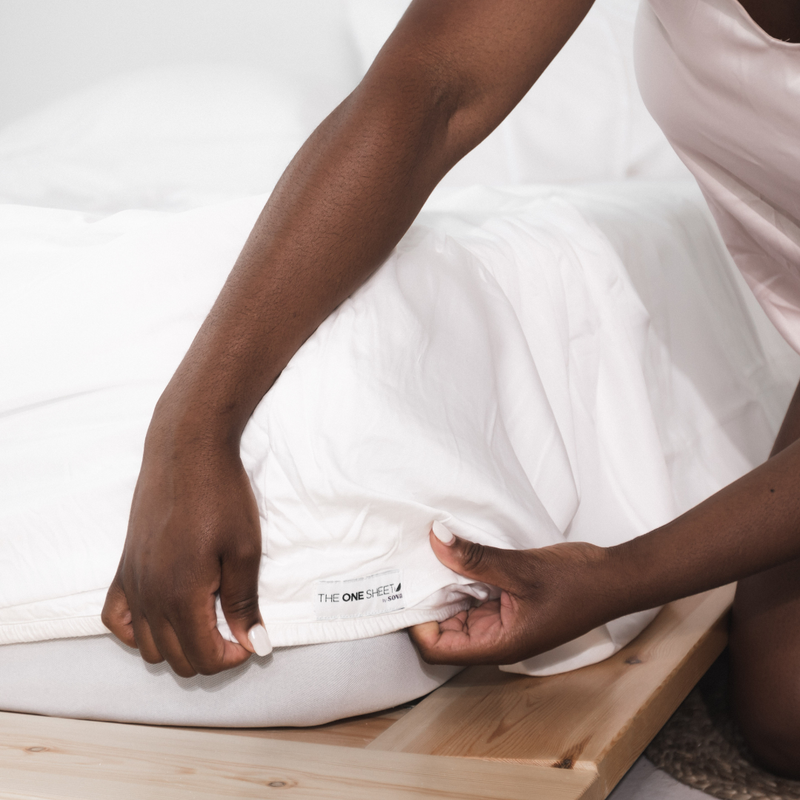
This is one place The One Sheet has a quiet advantage. Because the top sheet and fitted sheet are permanently sewn together at the foot, the whole set washes as a single connected piece, and every order ships with a free mesh wash bag so it moves through the machine without twisting around other laundry or tangling on itself. No separate flat sheet to lose, bunch, or wear unevenly, and no wrestling a giant knot out of the dryer.
The Sheet Problem Nobody Is Comparing
Percale and sateen are a real decision, but for a lot of people the bigger nightly frustration is not the weave at all. It is the top sheet that slides down, twists into a rope, or ends up kicked to the floor by morning, no matter how crisp or silky it started out. A percale sheet and a sateen sheet will both do that, because both are separate flat sheets that are free to migrate.
The One Sheet removes that failure point by design. The top sheet is sewn to the fitted sheet at the foot of the bed, a patented connected design that makes shifting, bunching, and cover-stealing structurally impossible. You still get the organic bamboo viscose feel and the temperature benefits; you just stop losing the top sheet every night. So once you have settled the crisp-versus-silky question for yourself, it is worth asking whether the sheet is built to stay put in the first place.
Key Takeaways
- Percale and sateen are weaves, not fabrics: percale is a plain one-over, one-under weave; sateen is a three-over, one-under weave.
- Percale feels crisp, matte, and cool, making it the better pick for hot sleepers and warm rooms.
- Sateen feels silky, smooth, and slightly warmer, making it better for cold sleepers who want a luxe drape.
- Sateen is softer on day one and wrinkles less; percale is more durable and softens with every wash.
- The fiber matters as much as the weave: organic bamboo viscose stays cool like percale while feeling soft like sateen.
- Whatever weave you choose, a separate flat sheet can still shift; The One Sheet's connected design keeps the top sheet in place.
Percale vs. Sateen FAQ
What sleeps cooler, percale or sateen? Percale sleeps cooler. Its open plain weave lets air move through the fabric and releases body heat, while sateen's denser surface holds a little more warmth.
Which is softer, percale or sateen? Sateen is softer right away thanks to its silky surface floats. Percale starts crisper and becomes soft and broken-in after repeated washing.
Which wrinkles less, percale or sateen? Sateen wrinkles less. Its smooth, dense surface resists creasing and looks polished even out of the dryer, while percale shows wrinkles more.
What are the disadvantages of percale sheets? Percale wrinkles more easily and can feel stiff or cool at first, which some people find too crisp. It also softens gradually rather than feeling plush immediately.
Do high-end hotels use percale or sateen sheets? Both. Hotels choose percale for a crisp, breezy bed and sateen for a silky, plush one. The Ritz-Carlton's classic set, for instance, is a 400 thread count cotton sateen.
Is bamboo viscose percale or sateen? Neither by default. Percale and sateen describe the weave, while bamboo viscose is the fiber. The One Sheet uses organic bamboo viscose chosen for its natural breathability and soft hand rather than committing to a single weave.
Still deciding between crisp and silky? The One Sheet gives you the cool, breathable comfort of organic bamboo viscose in a connected design that never slides off the bed, backed by a 100-night sleep trial.