Quick answer: Bed sheets pill because friction rubs loose fiber ends to the surface, where they tangle into tiny hard balls. The two things that decide how badly a set pills are the fiber (short-staple cotton, microfiber, and poly blends pill fastest) and the care (hot water, high-dryer heat, harsh detergent, and washing sheets with rough items like towels and zippers all speed it up). You cannot un-break a fiber, so shaving removes pills that already formed while smarter buying and gentler washing stop new ones.
Almost everyone has run a hand across the bottom of the bed and felt it: a rough, sandpapery patch of little fabric balls where the sheet used to be smooth. Pilling is one of the most common complaints about bed sheets, and it is one of the most misunderstood. It is not dirt, it is not lint from the dryer, and it is not always a sign that you bought a bad set. It is a physical process, and once you understand the mechanism you can predict which sheets will pill, slow it down dramatically, and clean up the sheets you already own.
What is pilling, exactly?
Pilling is the formation of small tangled balls of fiber, called pills, on the surface of a fabric where it is exposed to repeated rubbing. Textile scientists describe pilling as a process that moves through roughly four stages: loose fiber ends first migrate to the surface and create a soft layer of fuzz, that fuzz then entangles under continued friction, the entangled fibers grow into visible pills, and finally the pills either wear off or stay anchored depending on the fiber. In lab testing, fabrics are rubbed in a Martindale machine (the ISO 12945 method) for thousands of cycles and then graded on a five-point scale, where 5 means no pilling and 1 means severe pilling.
The important takeaway from that process is that a pill is not new material landing on your sheet. It is your sheet's own fibers, broken loose and knotted up. That is why pilling concentrates exactly where your body moves against the fabric most: the foot of the bed, the center where you sleep, and the edges you grip when you turn over.
Why do bed sheets pill?
Bed sheets pill for a small number of overlapping reasons, and most sets that pill badly are hit by more than one at once. Friction is the trigger, but fiber quality decides how much friction it takes and whether the pills fall off or lock on.
Friction and abrasion are the direct cause. Every night of tossing, turning, and rubbing against skin, body hair, and pajamas drags on the fabric surface, and rough companions in the wash (towels, denim, zippers, and hook-and-loop straps) add a second dose of abrasion. Short and low-quality fibers are the accelerant. Sheets woven from short-staple cotton or spun from short synthetic staples have thousands of tiny fiber ends poking out of the yarn, and short ends work loose far more easily than long ones. Fiber type also decides the aftermath: strong synthetic fibers like polyester anchor their pills firmly to the fabric because the anchoring fibers do not break, so a microfiber or poly-blend sheet often looks worse than cotton because the pills refuse to shed. Heat and harsh chemicals do the quiet damage: high dryer heat makes fibers brittle, and bleach and aggressive detergents weaken fiber integrity so strands snap and migrate sooner.
Here is how the main causes line up with the fix for each.
| Cause of pilling | Why it happens | The fix |
|---|---|---|
| Friction from sleeping | Body movement rubs fiber ends loose, especially at the feet and center | Rotate and flip sheets; keep two sets in rotation so no single set takes every night |
| Short-staple or low-grade fiber | Short ends escape the yarn quickly and ball up | Buy long-staple cotton, linen, or quality bamboo viscose |
| Synthetic or poly blend | Strong fibers anchor pills so they never shed | Choose natural or high-grade regenerated fibers over microfiber |
| Washing with towels and zippers | Rough items add abrasion and snag the weave | Wash sheets separately; bag delicate sets |
| High heat and harsh detergent | Heat embrittles fiber; bleach breaks it down | Warm or cold wash, mild detergent, low or no dryer heat |
Does pilling mean your sheets are poor quality?
Pilling does not always mean your sheets are poor quality, but it is often a signal about either the fiber or the way the set is being washed. A cheap short-staple or microfiber sheet will pill quickly almost no matter how carefully you treat it, so in that case pilling really is a quality tell. A genuinely good long-staple set, on the other hand, usually pills because of care: hot washes, overloaded machines, high dryer heat, or tumbling with towels. If a well-made set starts pilling within a wash or two, the culprit is far more likely to be the laundry routine than the sheet. The honest rule is that fiber sets the ceiling and care decides how close you get to it.
Which fabrics pill the most (and least)?
The fabrics that pill the most are microfiber, low-grade polyester blends, and short-staple cotton, because they combine short loose fiber ends with either weak strands that shed messily or strong synthetic strands that lock pills in place. The fabrics that resist pilling best are long-staple cottons (Pima and Egyptian), linen, and well-made bamboo viscose, because their fibers are longer, smoother, and less likely to work free of the yarn in the first place. No fabric is completely pill-proof, since any fiber will break under enough friction, but the starting fiber makes an enormous difference in how long a set stays smooth.
| Fabric | Pilling tendency | Why |
|---|---|---|
| Microfiber and poly blends | High, and pills anchor firmly | Strong synthetic fibers hold pills in place so they never shed, so the surface looks worse |
| Short-staple cotton | High | Thousands of short fiber ends work loose quickly under friction |
| Long-staple cotton (Pima, Egyptian) | Low | Longer fibers stay locked in the yarn and resist breaking |
| Linen | Low | Long, strong flax fibers rarely migrate to the surface |
| Quality bamboo viscose | Low | A long, smooth regenerated fiber that does not shed loose ends easily |

How to stop bed sheets from pilling
You cannot make a sheet pill-proof, but you can push pilling years down the road by changing what happens in the wash and the dryer. Since heat and friction are the two forces that free and break fibers, gentler laundering is where most of the prevention lives.
Wash sheets in cold or lukewarm water rather than hot, because hot water swells and weakens fibers and makes them shed faster. Use a mild, bleach-free liquid detergent and only about half of what the cap suggests, since excess detergent and optical brighteners leave residue that stiffens fibers and adds abrasion. Wash sheets on their own, never with towels, denim, or anything with zippers or hook-and-loop closures, all of which scrub the sheet surface. Do not overload the machine, because sheets need room to move freely instead of grinding against each other in a packed drum. Dry on low heat or line dry, and pull the sheets out while they are still slightly damp so they are not tumbling dry against the drum after the moisture is gone. Finally, keep a second set in rotation so no single set absorbs every night of friction.
How to remove pilling that already started
When pills have already formed, the only real fix is to cut them off, because you cannot re-attach a broken fiber. Removing pills is cosmetic and safe when done carefully, and it can bring a rough sheet back to smooth in a few minutes.
The cleanest tool is an electric fabric shaver, which glides over the surface and shears the pills off without touching the weave underneath. If you do not own one, you can pull the fabric flat and taut over a hard surface and gently run a disposable razor across it in one direction, or lift and snip stubborn pills with small scissors. Work slowly and keep the fabric tight so the blade skims the pills rather than catching the sheet, and go over an area lightly two or three times instead of pressing hard once. A lint roller or a strip of tape will lift the loose fuzz afterward. Shaving does remove a thin layer of fiber, so it is a maintenance step rather than a cure, which is exactly why prevention matters more than removal.
Where your washing habits meet your sheets
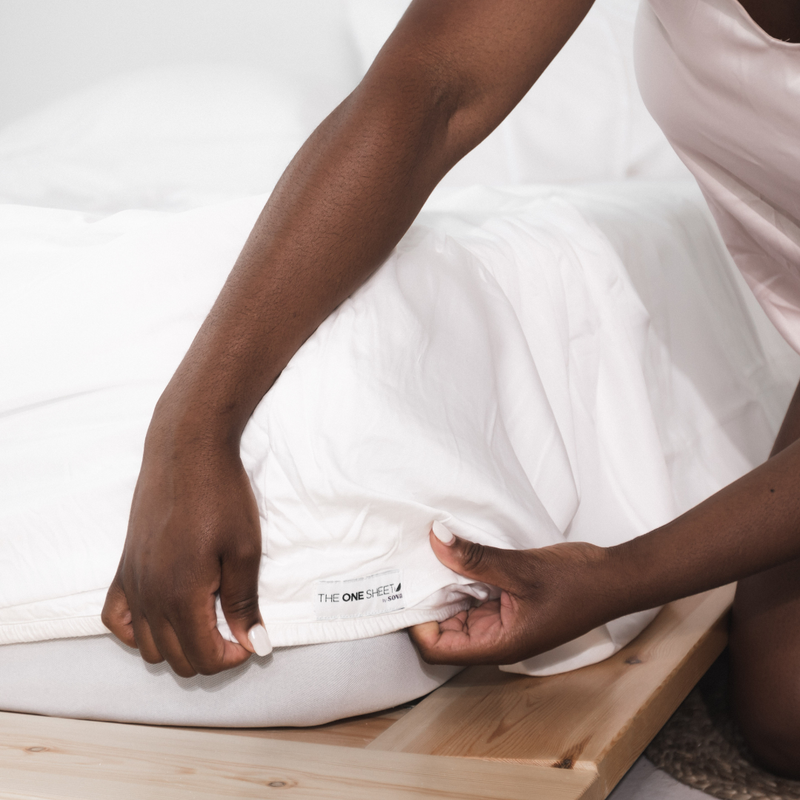
Because so much pilling is born in the laundry, the way a set is built for washing matters as much as the fiber it is made from. This is where the design of a connected set earns its keep. The One Sheet is a fitted sheet and top sheet permanently sewn together at the foot of the bed, so the whole thing goes through the wash as a single piece instead of two loose sheets that twist, snag, and grind against each other in the drum. Less tangling in the wash means less of the in-wash friction that lifts fiber ends and starts pills.
Every One Sheet also ships with a free mesh wash bag, and for a pilling-prone routine that bag is not an afterthought. Zipping the set into the bag keeps it from wrapping around agitators or catching on anything rough in a mixed load, which is one of the named causes of surface abrasion. The One Sheet is made from organic bamboo viscose, a long, smooth regenerated fiber that resists the quick shedding you get from short-staple or microfiber sheets, and it is OEKO-TEX Standard 100 certified and made from FSC certified materials. If you want to see how a set holds up in your own laundry routine before committing, it comes with a 100-night sleep trial.
Key takeaways
- Pilling is your sheet's own fibers breaking loose under friction and tangling into balls, not lint landing from outside.
- The two biggest factors are fiber (short-staple cotton, microfiber, and poly blends pill worst) and care (heat, harsh detergent, and rough wash companions).
- Synthetic fibers anchor their pills so a microfiber sheet often looks worse than cotton even when both pill.
- Prevention lives in the wash: cold or warm water, mild detergent, low dryer heat, and never washing sheets with towels or zippers.
- Removing pills with a fabric shaver or a taut razor is cosmetic and safe, but it thins the fabric, so prevention beats removal.
- Long-staple cotton, linen, and quality bamboo viscose resist pilling far longer than budget short-fiber sheets.
Frequently asked questions
How do I stop my sheets from pilling?
To stop sheets from pilling, wash them in cold or lukewarm water with a mild, bleach-free detergent, keep them out of loads with towels, denim, and zippers, dry on low heat or line dry, and start with long-staple or quality bamboo viscose sheets rather than short-staple or microfiber. Reducing heat and friction is what slows pilling most.
Does pilling mean poor quality?
Pilling can mean poor quality when a short-staple or microfiber sheet pills within a wash or two, but a well-made long-staple set usually pills because of care, not construction. Hot water, high dryer heat, and washing with rough items will pill even good sheets, so pilling is a signal to check both the fiber and the laundry routine.
How do you fix pilled bed sheets?
You fix pilled bed sheets by shearing the pills off, since a broken fiber cannot be reattached. An electric fabric shaver is the cleanest tool; a disposable razor pulled across taut fabric or small scissors also work if you keep the sheet tight and work gently so the blade skims the pills rather than snagging the weave.
What causes sheets to get little balls on them?
Little balls on sheets are pills, caused by friction rubbing loose fiber ends to the surface where they tangle and knot. Nightly body movement, plus abrasion from washing sheets with towels or zippers and damage from high heat and harsh detergent, all free and break fibers that then ball up.
Do bamboo viscose sheets pill?
Bamboo viscose sheets can pill, since any fiber will pill under enough friction, but quality bamboo viscose resists it better than short-staple cotton or microfiber because it is a long, smooth regenerated fiber that does not shed loose ends as quickly. Gentle washing and low dryer heat keep bamboo viscose smooth far longer.
Why do my sheets pill only where my feet are?
Sheets pill at the foot of the bed because that is where friction is most constant. Feet and heels rub the fabric all night, often against rougher skin, and that repeated localized abrasion frees and tangles fiber ends faster there than anywhere else on the bed.
Pilling is a fabric and care problem, and the fix is part smarter buying, part gentler laundry. If your sheets pill no matter how carefully you wash them, a long, smooth organic bamboo viscose set built to wash as one piece is the easier place to start. See The One Sheet below.