Quick answer: Extra deep pocket sheets have fitted-sheet pockets of roughly 18 to 22 inches, made for very thick mattresses that a standard or regular deep pocket sheet cannot cover. You genuinely need them if your mattress measures about 18 inches or more once you include a pillow top, a topper, and a protector. If your mattress is 17 inches or less, a standard deep pocket sheet fits better, because an over-deep sheet leaves loose fabric that billows and slides.
Extra deep pocket sheets solve a real problem: mattresses have gotten taller, and a normal fitted sheet pops off a thick bed by morning. But they are also one of the most over-bought items in the linen closet. Plenty of people order the deepest sheet they can find, then wonder why it bunches, balloons, and slides around a mattress it was never meant for.
This guide draws a clear line between the two situations. It covers what actually counts as extra deep, how to measure your bed so you buy the right tier once, and the honest cases where extra deep is exactly wrong for you. If you want the broader primer on pocket depth across every mattress height, our deep pocket sheets guide covers that end of the range in detail. This one is about the tall stuff.
What Counts as an Extra Deep Pocket Sheet?
An extra deep pocket sheet is a fitted sheet with corner pockets deep enough to wrap a mattress roughly 18 to 22 inches tall. Pocket depth is the vertical measurement of the fitted sheet's side, from the top surface of the mattress down to where the elastic hem tucks underneath.
Retailers and mattress brands use three loose tiers, and the numbers vary by brand, so the pocket depth on the label matters more than the name. As a working reference, standard fitted sheets carry 7 to 12 inch pockets, deep pocket sheets run about 13 to 17 inches, and extra deep pocket sheets stretch from about 18 to 22 inches, with a few specialty sets going to 24 or 25 inches. Southshore Fine Linens and Wholesale Beddings both market extra deep sets that fit mattresses up to 22 inches, while a mainstream brand like Boll & Branch caps its deep pocket fitted sheets at 17 inches.
| Pocket tier | Typical pocket depth | Fits a mattress up to | Best for |
|---|---|---|---|
| Standard | 7 to 12 inches | About 12 inches | Older or slim all-foam mattresses, bunk and trundle beds |
| Deep pocket | 13 to 17 inches | About 15 to 17 inches | Most modern mattresses, hybrids, low pillow tops |
| Extra deep pocket | 18 to 22 inches | About 18 to 22 inches | Tall pillow tops, hybrid plus a thick topper, stacked adjustable setups |
The takeaway: "deep" and "extra deep" are marketing tiers, not standards. Always read the pocket-depth number on the product listing before you buy.

How Deep Is Your Mattress, Really?
Most people guess their mattress height, and most guesses are too high. The average mattress is 8 to 14 inches tall. All-foam beds average 9 to 12 inches, hybrids run 11 to 13 inches, and pillow-top mattresses typically land between 12 and 16 inches. A true 18-plus inch mattress is the exception, not the rule, which is why so many extra deep sheets end up loose.
Measure before you shop, and measure the whole stack, not the bare mattress.
- Strip the bed down to the bare mattress.
- Stand a tape measure vertically at the side of the mattress, not at a seam, since seams add loft that throws the number off.
- Measure from the top sleeping surface straight down to the bottom edge.
- Add the height of anything that lives under the sheet: a mattress topper, a mattress protector, or a pad.
- Add about 1 inch of breathing room so the sheet seats without straining.
That final number, your mattress plus everything under the sheet plus an inch, is the pocket depth to shop for. If it lands at 17 inches or below, you want a deep pocket sheet, not an extra deep one.
When You Actually Need Extra Deep Pocket Sheets
Extra deep pocket sheets earn their keep in a handful of specific setups. If you recognize your bed here, buy the depth without hesitation.
A tall pillow-top or Euro-top mattress is the classic case. These beds can measure 15 to 16 inches on their own, and once you add a protector you are knocking on the door of 18 inches. A thick hybrid stacked with a plush topper is the other common trigger; a 13 inch hybrid plus a 3 to 4 inch topper crosses into extra deep territory fast. Adjustable beds sometimes stack a base mattress with additional layers, and split or dual setups can leave you measuring each side. In all of these, a standard deep pocket sheet will ride up off the corners the first time you sit on the edge.
The signal is simple. If your measured stack is about 18 inches or more, extra deep is the right tier, and anything shallower will fight you every morning.
When You Don't Need Them (and What Over-Buying Costs You)
Here is the part most product pages skip. If your mattress measures 17 inches or less, extra deep pocket sheets are the wrong choice, and buying them creates the exact problem you were trying to fix.
A pocket that is far deeper than the mattress leaves a surplus of fabric with nowhere to go. That extra material gathers under the corners, balloons at the sides, and lifts off as soon as you move. This is a genuine and common complaint; homeowners regularly grumble that today's sheets are cut for 18 to 20 inch beds they do not own, and that the excess never lies flat. Folding the slack underneath is a workaround, not a fit.
Two related traps are worth naming. First, matching the wrong bed size will never be rescued by pocket depth: a King fitted sheet on a Queen mattress stays loose no matter how deep the pocket. Second, cotton sheets can shrink 3 to 5 percent in a hot wash, so a pocket bought right at the edge of your measurement can tighten past usefulness after a few cycles. Buy for your measured stack, give yourself an inch, and do not reach for extra deep unless the number tells you to.
Why Depth Alone Doesn't Keep a Sheet Put
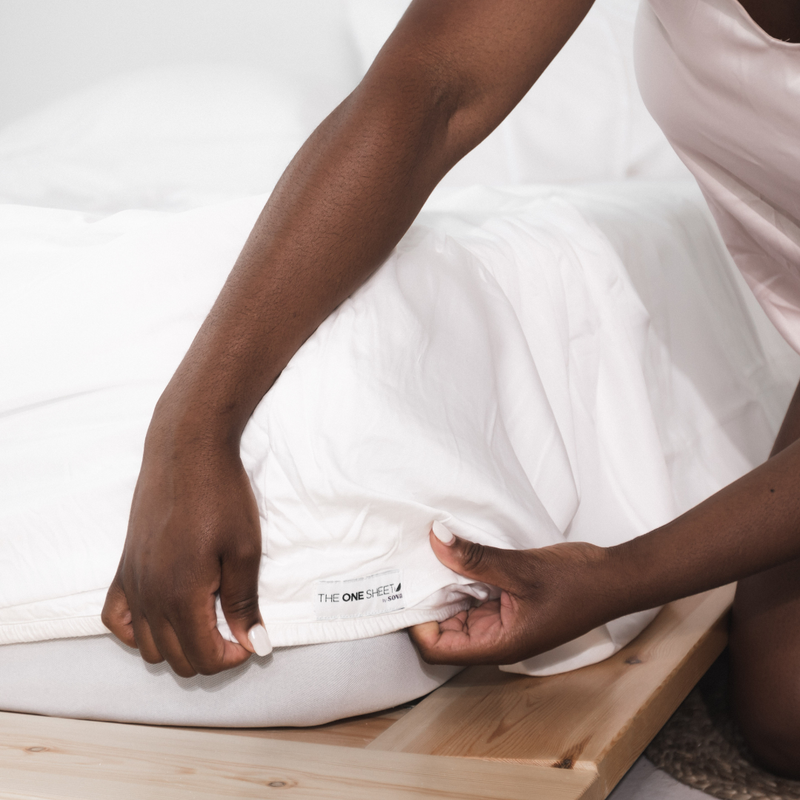
Even the correct pocket depth pops off if the corner is not seated right, and this is where most "my sheet won't stay on" frustration actually starts. People pull the fitted-sheet pocket straight down over the tip of the mattress corner, which tents the fabric into an upside-down U so the elastic only grips the point. The fix is to hook each corner over the mattress and pull the pocket flat under the underside, so the deep pocket wraps the bottom of the mattress instead of clinging to the edge.
Pocket depth is the second variable, not the first. A correctly seated corner still fails if the pocket is genuinely too shallow to reach under a thick mattress, which is the whole reason extra deep sheets exist. After seating and depth comes the elastic: a sheet with elastic all the way around the hem grips the underside far better than one with elastic only at the four corners, and corner-only elastic is a frequent culprit behind sheets that slide.
Clips, straps, suspenders, and all-around grippers exist for a reason, and they can buy you a better night. But they manage a symptom. They add tension to a sheet that keeps trying to lift, and you re-clip them every time you change the bed. The One Sheet takes a different route to the same goal: the top sheet is permanently sewn to the fitted sheet at the foot of the bed, so the layers cannot shift independently, and the fitted sheet is built with deep pockets and an all-around fit that seats to mattresses up to 17 inches. That covers the vast majority of thick, hybrid, pillow-top, and adjustable setups. If your measured stack is a true 20-plus inch tower, you are in specialty extra deep territory and should shop that depth specifically; connected design removes the shift problem, but it cannot add inches a pocket does not have.
Extra Deep Pocket Sheet Sizes by Bed
Pocket depth is only half the fit. The sheet also has to match your bed's length and width, and those are fixed by size. Use the surface dimensions below, then layer your measured pocket depth on top.
| Bed size | Mattress surface (W x L) | Common depth to expect | Pocket tier to shop |
|---|---|---|---|
| Twin | 38 x 75 inches | 8 to 12 inches | Standard to deep |
| Twin XL | 38 x 80 inches | 8 to 14 inches | Standard to deep |
| Full | 54 x 75 inches | 9 to 14 inches | Deep |
| Queen | 60 x 80 inches | 10 to 16 inches | Deep, extra deep if pillow-topped |
| King | 76 x 80 inches | 10 to 18 inches | Deep, extra deep if pillow-topped |
| California King | 72 x 84 inches | 10 to 18 inches | Deep, extra deep if pillow-topped |
Width and length come from the bed size; depth comes from your tape measure. Get both right and the sheet has no reason to wander.
Caring for Deep Pocket Sheets So They Keep Their Fit
A deep pocket sheet that fit perfectly in the store can shrink into a too-tight or too-loose fit through bad laundering. Wash on cold or warm rather than hot, skip high-heat drying, and pull sheets out slightly damp to limit shrinkage, which protects both the pocket depth you paid for and the fabric itself. Organic bamboo viscose in particular does best on a gentle, lower-heat routine.
This is also where a connected set has a quiet advantage at the laundry stage. Because The One Sheet's top and fitted sheets are sewn together, they wash and dry as a single piece instead of a fitted sheet that swallows everything else in the drum. Every order ships with a free mesh wash bag so the whole set launders as one without tangling or twisting into a rope, which is the failure point that stretches elastic and shortens a sheet's life. It is made from organic bamboo viscose, is OEKO-TEX Standard 100 certified, and comes with a 100-night sleep trial so you can confirm the fit on your own bed.
Key Takeaways
- Extra deep pocket sheets carry roughly 18 to 22 inch pockets and are built for mattresses that tall; standard sheets run 7 to 12 inches and deep pocket sheets run about 13 to 17 inches.
- The average mattress is only 8 to 14 inches, so most beds need a deep pocket sheet, not an extra deep one.
- Measure the full stack, meaning mattress plus topper plus protector, then add about 1 inch, and shop that number.
- Extra deep is right for tall pillow tops, hybrid-plus-topper stacks, and layered adjustable beds measuring about 18 inches or more.
- Buying extra deep for a 17 inch or shallower mattress leaves loose fabric that billows and slides off.
- Depth is only part of the fit: seat each corner flat under the mattress, favor all-around elastic, and remember a connected design removes the shift problem that clips only manage.
Frequently Asked Questions
What is the deepest pocket sheet you can get?
The deepest widely available fitted sheets carry pockets around 22 inches, with a few specialty extra deep sets reaching 24 or 25 inches. Beyond about 22 inches you are usually looking at made-to-order or specialty bedding, since very few consumer mattresses are that tall.
What is the difference between deep pocket and extra deep pocket sheets?
Deep pocket sheets have pockets of roughly 13 to 17 inches and fit most modern mattresses, while extra deep pocket sheets have pockets of about 18 to 22 inches for very thick beds. The difference is the pocket depth of the fitted sheet's corners, so match it to your measured mattress height rather than to the label alone.
Where can I buy extra deep pocket fitted sheets?
Extra deep pocket fitted sheets are sold by most major bedding retailers and mattress brands, both in stores and online, in tiers up to about 22 inches. Confirm the exact pocket-depth number on the listing before buying, because "extra deep" is a marketing tier that varies from brand to brand.
Does a thick mattress always need extra deep pocket sheets?
No. A thick mattress needs a sheet whose pocket depth matches its measured height, and most thick mattresses land in the deep pocket range of 13 to 17 inches rather than the extra deep range. Only mattresses measuring about 18 inches or more, once toppers and protectors are counted, truly require extra deep pockets.
Why do my deep pocket sheets keep coming off even though they fit?
Most often the corner is seated wrong: the pocket is pulled straight down over the mattress tip and tents into an upside-down U, so the elastic grips only the point instead of wrapping the underside. Hook each corner flat under the mattress, favor a sheet with all-around elastic, and consider a connected design if independent shifting keeps undoing your work.