Quick answer: Wash your sheets once a week. Stretch to every two weeks only if you shower before bed, sleep alone, and keep your room cool. Wash every 3 to 4 days if you sweat at night, share the bed with pets, or have allergies, asthma, or sensitive skin.
Wash your sheets once a week. That is the short answer, and it is the one almost every dermatologist, sleep researcher, and laundry expert lands on. If you shower before bed, sleep alone, and keep your room cool, you can stretch it to every two weeks without much guilt. Anything longer than that, and the math starts working against you.
But "once a week" is the easy part to say and the hard part to actually do. Most people know the rule and still fall behind, not because they are lazy, but because stripping and remaking a bed is a genuine chore. So this guide covers both halves: how often you really need to wash your sheets for different situations, and how to make the routine simple enough that you actually keep it.
The short answer, by situation
Your ideal wash frequency depends on how you sleep and who (or what) shares the bed. Here is a realistic schedule.
| Your situation | How often to wash sheets |
|---|---|
| Most adults, average sleeper | Once a week |
| You shower before bed, sleep alone, cool room | Every 1 to 2 weeks |
| You sweat heavily or run hot at night | Every 3 to 4 days |
| Pets sleep in the bed | Every 3 to 4 days |
| Allergies, asthma, eczema, or acne-prone skin | Every 3 to 4 days |
| You are recovering from illness | Wash when symptoms clear, then resume weekly |
| You sleep without clothes | Twice a week |
The pattern is simple. The more your body, your habits, or your roommates add to the bed, the more often it needs a reset.
What actually builds up in your sheets
It helps to know what you are washing out, because the buildup is faster than most people picture.
Every night you shed skin. The body sheds roughly 600,000 skin cells a year, and a good share of those land on your sheets and pillowcase. Those flakes are food for dust mites, the microscopic creatures that thrive in warm, slightly damp bedding. You also leave behind sweat, body oils, saliva, and whatever products you put on your skin and hair before bed.
Then there is the bacteria. In one lab experiment, swabs from pillowcases left unwashed for a single week carried about 3 million colony-forming units of bacteria per square inch, which the researchers calculated at roughly 17,000 times more than a toilet seat. Sheets were not far behind. Left a full month, the counts climbed into the tens of millions. You are not sleeping in a hazmat zone after seven days, but the trend is clear, and it is the reason the once-a-week guideline exists.
For most healthy people this buildup is more of a hygiene and comfort issue than a medical emergency. For anyone with allergies, asthma, eczema, or breakout-prone skin, though, dust mites and bacteria can make symptoms noticeably worse, which is why those groups should wash more often.
Why one week is the magic number
A week is the point where buildup becomes meaningful but has not yet caused problems for most sleepers. Wash much more often than that and you are spending laundry time you do not need to. Wait much longer and the oils, sweat, and microbes reach levels that can irritate skin, aggravate allergies, and leave that faintly stale smell that fresh sheets so obviously do not have.
There is also a simple comfort argument. Clean sheets feel better. The crisp, cool first night on fresh bedding is one of the small reliable pleasures of taking care of your home, and a weekly rhythm keeps it coming back.

When you should wash more often
Some weeks call for a shorter cycle. Bump up the frequency when any of these apply.
You sweat at night or live somewhere warm and humid. Moisture is what dust mites and bacteria love most, so hot sleepers should plan on every three to four days.
Pets share the bed. Dogs and cats track in dander, pollen, and outdoor dirt, and they shed onto the sheets all night. Every three to four days keeps it manageable.
You have allergies, asthma, or sensitive skin. More frequent washing is one of the most effective things you can do to cut down on the dust mites and allergens that trigger symptoms.
You have been sick. Wash and fully dry your sheets once symptoms pass to clear out lingering germs, then go back to your normal schedule.
You sleep without clothing. With more direct skin contact, twice a week is a reasonable target.
How often to wash everything else on the bed
Sheets get the most attention, but the rest of your bedding has its own clock. Pillowcases actually pick up dirt fastest, since they catch facial oils, hair products, and drool, so they benefit from a more frequent swap than the sheets they sit on.
| Bedding item | How often to clean |
|---|---|
| Pillowcases | Every 3 to 4 days |
| Flat and fitted sheets | Once a week |
| Mattress protector | Every 1 to 2 months |
| Duvet cover or comforter | Every 1 to 2 months |
| Pillows (the pillow itself) | Every 4 to 6 months |
| Duvet insert or comforter (the filling) | Every 6 months |
| Mattress (vacuum and spot clean) | Every 6 months |
A quick habit that helps with all of it: in the morning, pull the covers back and let the bed breathe for an hour before you straighten it. Trapping warm moisture under a made comforter the second you get up is exactly the environment dust mites prefer.
The real reason people fall behind (and an easy fix)
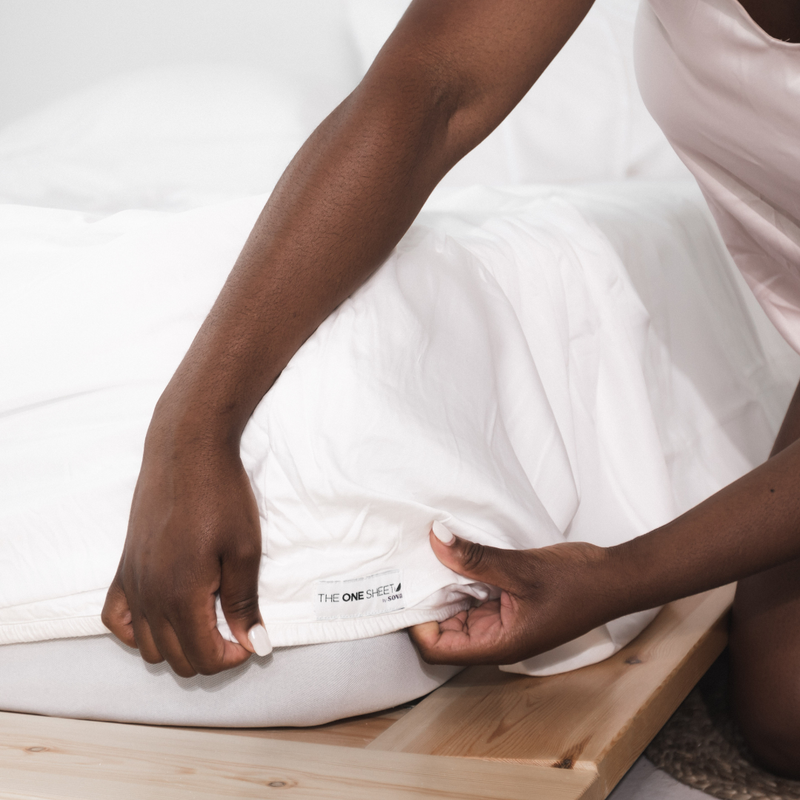
Here is the part most washing guides skip. The reason people stretch a week into three is almost never that they forgot. It is that remaking the bed afterward is annoying. Wrestling a flat top sheet back into place, getting it even on both sides, then fighting a fitted sheet whose corners will not stay seated is a ten-minute job that turns laundry day into a project.
And those popping corners are worth understanding, because it is usually a technique issue, not a defective sheet. Fitted-sheet corners pop off most often when you pull the pocket straight down over the tip of the mattress, which tents the elastic into an upside-down U so it only grips the very corner point. The fix is to seat each corner flat. Hook the pocket over the corner and pull it under the mattress so the deep pocket wraps the underside and holds. The second cause is pocket depth: a correctly seated corner still fails if the pocket is too shallow for your mattress, so a 15-inch-plus mattress needs pockets in the 16 to 22 inch range. Clips, suspenders, and grippers can help, but they are ongoing symptom management for a problem that better technique and the right pocket depth usually solve.
This is also where the design of your bedding matters. The One Sheet by Sova is built around this exact friction: the top sheet is permanently sewn to the fitted sheet at the foot of the bed, so the two layers move as one. Made from organic bamboo viscose and backed by a 100-night sleep trial, it strips and remakes as a single connected piece, which means no realigning a loose top sheet and no twisting overnight. When the bed is faster to remake, washing it weekly stops feeling like a chore you put off.
How to wash your sheets so they last
Doing it on the right settings protects both your skin and the fabric.
Use warm or hot water when the care label allows it, since heat is what breaks down body oils and helps clear dust mites. Always check the label first, because delicate and natural fabrics often call for a gentler temperature.
Do not overload the machine. Sheets need room to move so the water and detergent can actually rinse through. Stuffing the drum leaves residue behind.
Go easy on detergent and skip the fabric softener. Too much soap leaves a film that feels stiff over time, and softener coats fibers in a way that reduces breathability and absorbency.
Dry thoroughly. Damp sheets folded into a closet are an invitation for mildew. Use a low or medium heat setting and pull them out promptly to limit wrinkles.
For bamboo viscose sheets specifically, wash cold to warm on a gentle cycle with a mild detergent, and tumble dry low or line dry. The fabric stays soft and holds up well when you keep the heat moderate and the detergent simple.
Protect natural-fiber sheets with a mesh wash bag. It keeps the fabric from snagging, stretching, or twisting around heavier items in the drum, which is a common reason sheets pill or wear thin before their time. This is one place the design of your bedding helps: The One Sheet ships with a free mesh wash bag sized for the connected set, so the top and fitted sheet wash as one piece without tangling, and the whole thing comes out ready to go back on the bed.
A practical tip that makes the whole routine easier: keep two or three sets in rotation. One on the bed, one clean in the closet, one in the wash. That way changing the bed is a five-minute swap instead of a wait on the dryer.
Frequently asked questions
Is once a month enough to wash sheets? No. After a month, bacteria and dust mite buildup reach levels that can irritate skin and aggravate allergies, and the sheets simply will not feel or smell fresh. Once a week is the target, with two weeks as the outer limit for low-sweat solo sleepers.
How long can you go without washing your sheets? Two weeks is the realistic maximum for most people, and only if you shower before bed, sleep alone, and keep the room cool. Beyond that, the hygiene and comfort tradeoffs add up quickly.
How often should I wash my sheets if I live alone? Living alone helps, but you still shed skin, sweat, and oils every night. Once a week is ideal. If you shower before bed and run cool, every other week is acceptable.
How often should you wash sheets if you shower before bed? Showering first genuinely reduces the oils and dead skin transferred to your sheets, so you can lean toward the longer end, around every 10 to 14 days, as long as you are not a heavy sweater.
How often should you wash pillowcases? More often than the sheets. Every three to four days is a good rule, since pillowcases collect facial oils, hair products, and saliva faster than the rest of the bed.
How do you wash bamboo viscose sheets? Cold to warm water, gentle cycle, mild detergent, no fabric softener, and tumble dry low or line dry. Moderate heat and simple detergent keep the fabric soft and long-lasting.
Key takeaways
- Wash sheets once a week. Two weeks is the maximum, and only for cool, solo, shower-before-bed sleepers.
- Wash every 3 to 4 days if you sweat at night, share the bed with pets, or have allergies, asthma, or sensitive skin.
- Pillowcases need swapping more often than sheets, every 3 to 4 days.
- Use warm or hot water when the label allows, skip fabric softener, dry thoroughly, and protect sheets in a mesh wash bag.
- Keep two or three sets in rotation so changing the bed is a five-minute swap.
The bottom line
Once a week is the schedule worth keeping, with a two-week stretch reserved for cool, solo, shower-before-bed sleepers and a tighter three-to-four-day cycle for hot sleepers, pet owners, allergy sufferers, and anyone recovering from illness. The buildup of skin cells, oils, sweat, and bacteria is real, but it is also easy to stay ahead of once the routine stops feeling like a hassle. Wash on the right settings, keep a spare set in rotation, and make the bed easy to remake. The fresh-sheet feeling is worth showing up for every week.
If the part that keeps tripping you up is remaking the bed afterward, that is exactly what The One Sheet is built to solve. The connected design, organic bamboo viscose fabric, included free mesh wash bag, and 100-night sleep trial are all aimed at making the weekly reset something you actually keep up with.