Quick answer: Bamboo viscose is a soft, breathable fabric made by dissolving bamboo pulp into a liquid cellulose solution and spinning it into fiber, a process called the viscose (rayon) method. It is not woven from raw bamboo strands. Instead, the plant's cellulose is chemically processed and regenerated into a fine, silky fiber prized for softness and breathability in sheets, towels, and clothing.
If you have ever picked up a set of "bamboo sheets" and wondered how a stiff, woody plant turns into something that feels like a worn-in cotton tee, the answer is bamboo viscose. It is the most common form of bamboo fabric on the market, and it is not raw bamboo at all. Here is what it actually is, how it is made, and what to know before you buy.
What Is Bamboo Viscose, Exactly?
Bamboo viscose is a semi-synthetic textile made from the cellulose of the bamboo plant. "Semi-synthetic" sounds more alarming than it is: it just means the raw material (bamboo cellulose) is natural, but turning it into fiber requires a chemical process rather than simple spinning or weaving. Bamboo viscose is a type of rayon, and rayon is a generic term for any fiber made by dissolving plant cellulose and regenerating it into thread. The cellulose can come from bamboo, eucalyptus, beech, or several other plants; when it comes from bamboo specifically, the result is marketed as bamboo viscose or bamboo rayon.
That distinction matters because "bamboo" on a label can mean very different things depending on how the fabric was actually produced, which is the question most people are really asking when they search for this term.
How Is Bamboo Viscose Made?
The manufacturing process follows three broad stages:
- Pulping. Bamboo stalks are crushed and steeped in a chemical solution, typically sodium hydroxide, to break down the tough plant material and extract its cellulose.
- Dissolving. That cellulose is treated with additional solvents (often including carbon disulfide) until it becomes a thick, spinnable liquid pulp.
- Spinning. The liquid pulp is forced through fine spinnerets into a chemical bath, which hardens it into continuous filament fiber. That fiber is spun into yarn and woven or knit into fabric.
The plant itself is genuinely fast-growing and renewable. The part that draws scrutiny is the middle step: converting a woody stalk into a soft fiber takes real chemical processing, and how responsibly a mill manages those chemicals (recapturing and treating them versus letting them run off) varies a lot by manufacturer. That is one reason independent textile certifications matter more than the word "bamboo" alone, which we will get to below.
Is Bamboo Viscose the Same as 100% Bamboo?
No, and this is the single most common point of confusion. "100% bamboo fabric," in the sense of raw bamboo fiber mechanically combed and spun the way linen is made from flax, exists, but it is coarse, stiff, and almost never used in bedding or clothing. The soft, drapey "bamboo" sheets and shirts sold at scale are almost always bamboo viscose (regenerated cellulose), not mechanically processed raw bamboo. If a product simply says "bamboo" without specifying viscose, lyocell, or modal, it is worth asking the brand which process was actually used, since the fabric hand and durability differ meaningfully between them.

Bamboo Viscose vs. Bamboo Lyocell: What's the Real Difference?
Both start with the same plant. The difference is entirely in the chemical process used to turn cellulose into fiber:
- Bamboo viscose dissolves the cellulose in an open-loop chemical bath (sodium hydroxide and carbon disulfide are typical). It produces a fiber with a fluid, silky drape and a soft, cool hand-feel that softens further with washing.
- Bamboo lyocell uses a closed-loop solvent system, most often N-Methylmorpholine N-oxide (NMMO), which recovers and recycles the vast majority of the solvent rather than discharging it. Lyocell fiber tends to feel a bit crisper than viscose and generally holds its strength better when wet.
Neither process is "fake" bamboo; both are legitimate ways of turning bamboo cellulose into wearable, sleepable fiber. Viscose is usually the softer, more fluid-feeling option and is more widely available. Lyocell is often positioned as the more sustainably processed option because of the closed-loop solvent recovery, and it commonly costs more to produce as a result. Closed-loop processing is not exclusive to lyocell, though: some viscose mills, including the one behind The One Sheet's organic bamboo viscose, also run a closed-loop system that recaptures and recycles the process chemicals rather than discharging them. The fiber is still viscose, made with viscose's own softer, more fluid hand-feel; it is simply produced more responsibly than an open-loop mill.
Bamboo Viscose vs. Bamboo Lyocell vs. Cotton, at a Glance
| Bamboo Viscose | Bamboo Lyocell | Cotton | |
|---|---|---|---|
| Process | Open-loop chemical dissolving (sodium hydroxide, carbon disulfide) | Closed-loop solvent (NMMO), over 99% recovered | Mechanically spun from raw cotton fiber, no dissolving |
| Feel | Silky, fluid drape, cool hand-feel | Slightly crisper, smooth | Ranges from crisp (percale) to soft (sateen) with wear |
| Strength when wet | Loses some strength; construction quality matters | Holds strength better wet | Strong wet or dry |
| Typical price | Mid-range | Higher (more complex processing) | Wide range, budget to premium |
| Best for | Hot sleepers who want a soft, fluid drape | Buyers prioritizing closed-loop processing and durability | Buyers who want a widely available, easy-care fabric |
Why Does Bamboo Viscose Feel So Soft?
The softness is not marketing. Under a microscope, regenerated cellulose fibers like bamboo viscose have a smooth, rounded cross-section, unlike the more irregular, ridged structure of raw cotton fiber. That rounded shape is what gives bamboo viscose its characteristic silky, almost fluid hand-feel, often compared to a lightweight silk or a very high thread count cotton, without an actual high thread count doing the work.
What Are the Benefits of Bamboo Viscose Sheets?
- Breathability. Bamboo viscose fibers are highly absorbent and wick moisture away from the body efficiently, which is why the fabric is popular with people who run warm at night.
- Soft drape. The fluid hand-feel means bamboo viscose sheets tend to feel silky and lightweight rather than crisp, closer to a well-worn cotton sheet on day one.
- Breathable comfort for sensitive skin. The smooth fiber surface is gentler against skin than some rougher-textured fabrics, though "hypoallergenic" claims should always be read as "designed to help reduce irritation," not a guarantee, since no textile is universally non-irritating.
What Are the Drawbacks of Bamboo Viscose?
Honest answer: a few, and they mostly come down to how the fabric was manufactured and constructed.
- Chemical-intensive processing. As covered above, converting bamboo into viscose fiber requires real chemicals. Look for mills that use closed-loop or well-managed processes, and look for third-party certification rather than taking "eco-friendly" on faith.
- Strength when wet. Viscose fiber loses some tensile strength when saturated with water, which is why poorly constructed bamboo viscose sheets can pill or thin out after repeated washing. Fiber quality and construction matter here as much as the raw material.
- Care sensitivity. Bamboo viscose does best with cool water and low heat. High heat and harsh detergents accelerate wear on any viscose fabric, not just bamboo.
None of this makes bamboo viscose a bad fabric; it makes it a fabric where sourcing and construction quality genuinely separate a sheet set that lasts for years from one that pills in six months.
Is Bamboo Viscose Safe to Sleep On?
This is one of the most searched follow-up questions, and the honest answer is: it depends on how the finished fabric was tested, not on the word "bamboo" itself. The viscose manufacturing process uses chemical solvents, but those solvents are meant to be washed out and neutralized before the fiber ever becomes fabric. The way to verify that happened, rather than take a brand's word for it, is independent certification. OEKO-TEX Standard 100 is the relevant one to look for: it is a third-party test of the finished textile for a defined list of harmful substances, not a marketing label a brand can self-apply. Certified materials give you a verifiable answer instead of a vague "eco-friendly" claim.
How The One Sheet Uses Organic Bamboo Viscose
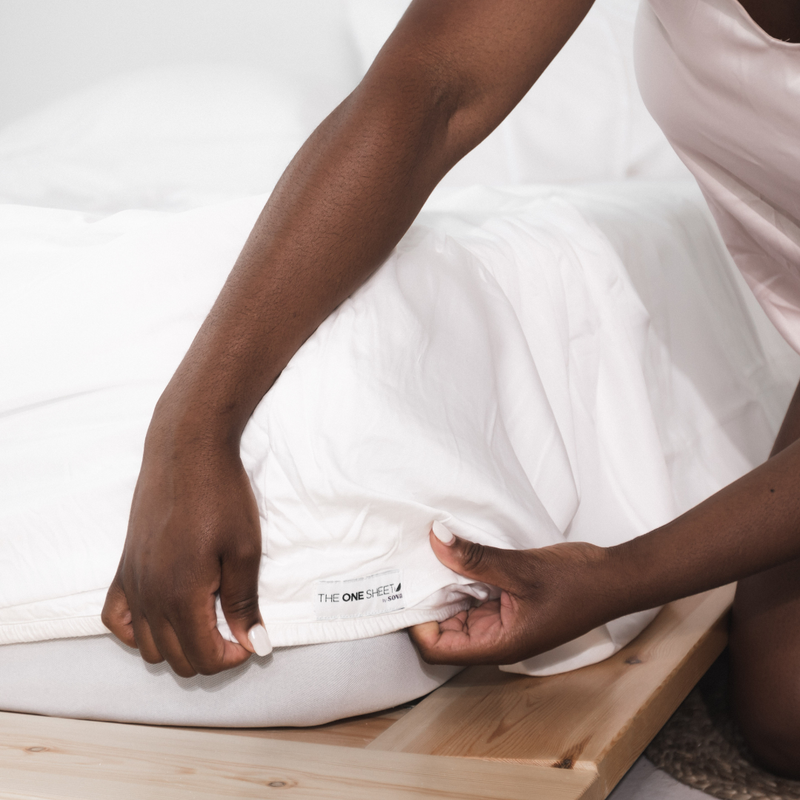
The One Sheet by Sova is made from organic bamboo viscose, chosen specifically for the properties covered above: the breathable, moisture-wicking hand-feel that suits hot sleepers, and a soft drape that feels lived-in rather than stiff. It is produced using a closed-loop process that recaptures and recycles the process chemicals rather than discharging them, addressing the main drawback of standard open-loop viscose manufacturing covered earlier. The fabric is also OEKO-TEX Standard 100 certified, which means the finished textile has been independently tested rather than simply labeled "natural." Sova also uses FSC certified materials, another verifiable, third-party standard rather than a vague sustainability claim.
The fabric choice sits alongside Sova's other defining feature: the top sheet is permanently sewn to the fitted sheet at the foot of the bed, a patented connected design that keeps the whole set anchored to the mattress instead of shifting, bunching, or sliding apart the way separate sheets do. Good fabric and good construction are different problems, and The One Sheet is built to solve both. Every order ships with a 100-night sleep trial, so there is time to actually live with the fabric before deciding.
How Do You Care for Bamboo Viscose Sheets?
Because viscose fiber is a little more delicate when wet, care matters more than it does with a rugged cotton twill:
- Wash in cool or lukewarm water on a gentle cycle.
- Skip the high-heat dryer setting; tumble low or line dry when possible.
- Avoid chlorine bleach and go easy on fabric softener, which can coat and dull the fiber over time.
- Wash sheets separately from anything with zippers, hooks, or rough textures that can snag the fiber.
This is also where a connected sheet set has a small, practical edge: because The One Sheet's top and fitted sheet are sewn together, the whole set washes and dries as one piece instead of two separate sheets that can twist, tangle, or get balled up with a duvet cover in the wash. Every order also includes a free mesh wash bag, which keeps the connected set from tangling with other laundry and is an easy way to extend the life of any bamboo viscose fabric, Sova's or otherwise.
Key Takeaways
- Bamboo viscose is a regenerated cellulose fiber made by dissolving bamboo pulp and spinning it into thread, not raw bamboo woven directly into cloth.
- It is a type of rayon, so "bamboo viscose" and "bamboo rayon" describe the same fabric.
- Bamboo lyocell uses a closed-loop solvent process and tends to feel crisper and hold up better wet, while bamboo viscose feels softer and more fluid, though some viscose mills (including Sova's) run closed-loop systems too.
- The rounded cross-section of the fiber, not thread count, is what makes bamboo viscose feel so smooth.
- Look for OEKO-TEX Standard 100 certification to verify safety claims instead of relying on the word "bamboo" alone.
- Cool water, low heat, and a wash bag go a long way toward keeping bamboo viscose sheets from pilling or thinning out.
Frequently Asked Questions
Is bamboo viscose good quality?
Bamboo viscose can be high quality or low quality depending entirely on fiber sourcing and construction. The material itself is soft and breathable; longevity comes down to how well it was spun, woven, and finished, which is why certifications and construction quality matter more than the word "bamboo" on a label.
Is bamboo viscose the same as polyester?
No. Polyester is a fully synthetic fiber made from petroleum. Bamboo viscose is a regenerated cellulose fiber made from a plant, processed chemically into thread. They can feel superficially similar in some cheap blends, but they are chemically and structurally different materials.
Is bamboo viscose the same as 100% bamboo?
No. Raw, mechanically processed "100% bamboo" fabric is coarse and rarely used in bedding. The soft bamboo sheets and clothing sold widely are almost always bamboo viscose, a regenerated cellulose fiber, not raw bamboo strands.
What are the disadvantages of bamboo viscose?
The main drawbacks are the chemical intensity of the viscose manufacturing process and the fiber's reduced strength when wet, which can lead to pilling on lower-quality sheets. Choosing OEKO-TEX Standard 100 certified fabric and following gentle wash care addresses most of these concerns.
What's better, bamboo viscose, or cotton?
Neither is universally "better." Bamboo viscose tends to feel softer, drapier, and more breathable for hot sleepers. Cotton, especially long-staple cotton, tends to be more durable over time and easier to care for. The right choice depends on whether softness or ruggedness matters more to you.
Bamboo viscose is a well-understood, widely used fabric, and knowing how it is actually made makes it much easier to tell a genuinely well-built bamboo sheet set from one riding on the word "bamboo" alone. If you want to feel the fabric for yourself, The One Sheet is made from organic bamboo viscose and backed by a 100-night sleep trial.